A travel blogger from Kolkata, India
Hi, my name is Moon. I am a content developer by profession and a travel blogger by passion. As a traveler, I want to explore every nook and corner of my beloved country India and beyond and share my travel stories on my blog. I have written for Hipmunk. You can check out more of my Hipmunk Hotels and Destinations posts here: https://footlooseforever.com/category/travel/usa-hotels/
Faith is the bird that feels the light when the dawn is still dark. ~ Rabindranath Tagore
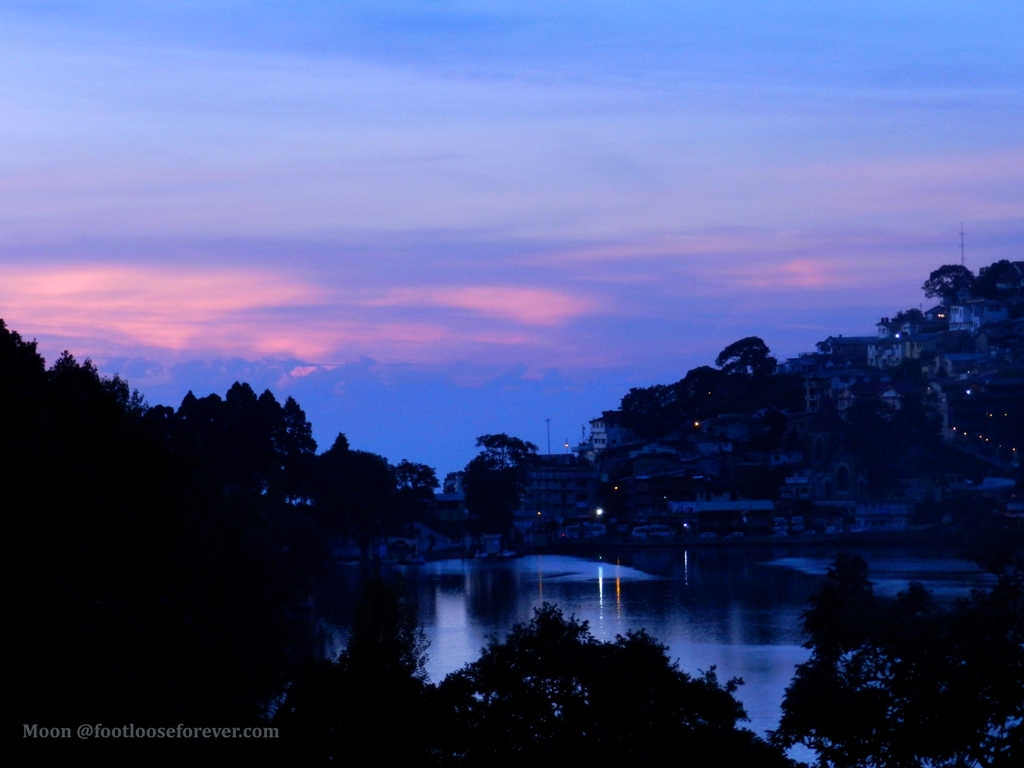
It was the morning we were to set out for Kausani from Nainital. So I woke up early at 5:30 that morning and went outside to observe the beauty and absorb the silence of dawn at Nainital. It has been my earliest morning capture so far. 🙂
The following shot was taken at Kausani at around 6:45 in the morning. I stood on the terrace for an hour waiting for the sun god to show up. But he was determined to hide behind the clouds that morning. The mountains and the Queen’s Meadow yonder were covered with a thick blanket of mist and the entire valley looked bluish in the pale morning light.
Published in response to this week’s Daily Post Photo Challenge – Early Bird.
To those men who still in this misconception that smell from sweating increases their macho appeal to women. To those men who don’t even understand how badly they smell and it is because of this people avoid them and for nothing else. To those men who sweat a lot and feel embarrassed about it but don’t know how to get rid of this stinking sweaty smell.
You might think why I am suddenly after stinking men? (No offence please, rather when you take your shirt off just smell once and you’ll know) I am among that unfortunate lot who often face the trouble of tolerating stinky people in public transport or stinky colleagues during the office hours, especially in summer. With summer round the corner, I thought it would be good time to talk about the topic.
Let me share a fact I read in an article on The Huffington Post – “While women have more sweat glands than men, men’s sweat glands produce more sweat.”
Some men think that sweaty smell increases their macho appeal to women (well, it could be your woman think that way about you but not the whole world, so please think before you go out). Some are completely ignorant about how smelly they can be and how terrible people around them may feel because of that. Well, when you appear well-dressed with neat and clean hair you look impressive at the first glance. But as you come closer with your suffocating body odour the impression index suddenly drops down to zero. Do you understand that? Perspiration is natural in a humid tropical country like ours but there are weapons like deodorants to fight with body odour.
I have noticed the younger generations are lot smarter. They are conscious not just about looking good but also smelling good and feeling good. And trust me, women like that and appreciate that.
It’s not that only appearance is important, because not everyone is blessed with good looks. What is important is to feel good and that’s definitely not destiny. It’s in your hand. Look around and you’ll find a variety of deodorants for men. Their refreshing fragrance will keep you cool and energized all day long. There are costly products like Loreal Men Expert Deodorant which offer longer lasting fragrance. But if you are like me who easily get bored of using the same deodorant everyday go for less expensive ones such as Nike, Fogg, Adidas, Axe or others. Pick three or four different deodorants and use them alternatively during the week. Buying online can save you money with some cool discount offers on products.
Remember, it’s not that sweat causes body odour.
It is the bacteria accumulating on particular areas of our body (e.g. armpit) that cause the stench. Deodorants contain antimicrobial element that fights and prevents odour for a limited period though. If you have the tendency of stinking you can apply deodorants twice or thrice a day. Believe me; personal care is equally important for both women and men. It is the first step to develop a healthy body and mind.
Disclaimer: All images in this post are taken from the internet.
“Iss hi doobte hue suraj ne hum mein pehli baar milaya tha … dekh lena, yahi doobta hua suraj hum mein ek din hamesha ke liye mila dega”
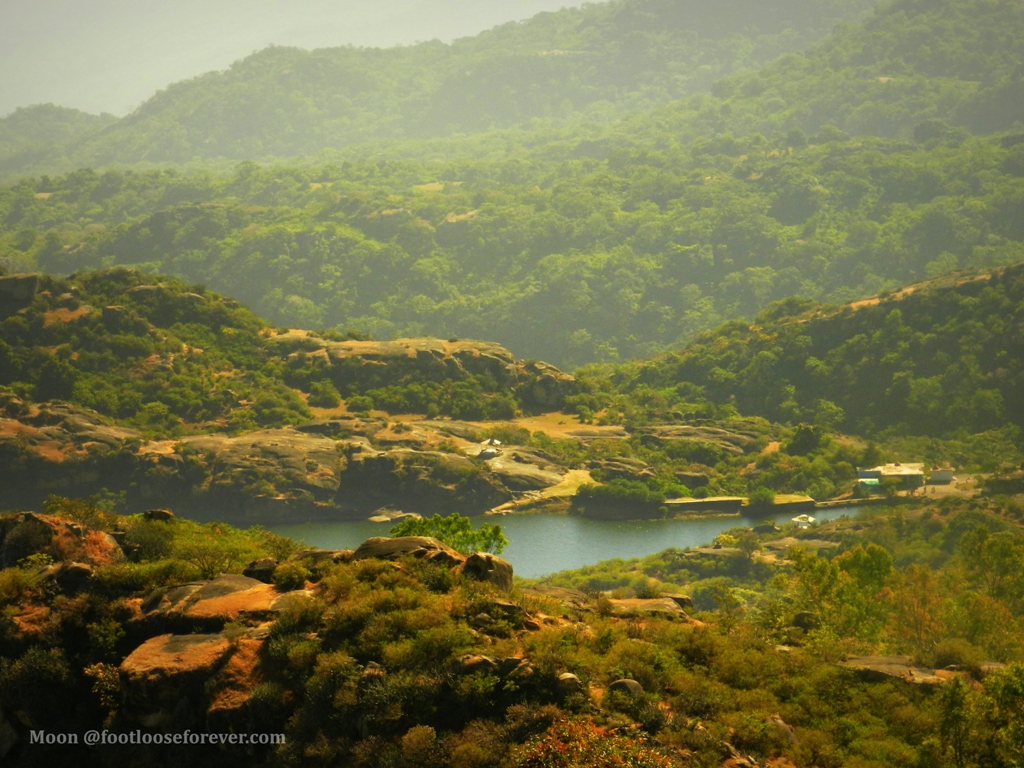
The dialogue from a popular Bollywood movie of the 80s, Qayamat Se Qayamat Tak, was resonating in my ear as our bus was approaching to the hills of Mount Abu. It was the place where some scenes of QSQT, including my favourite number “Gazab ka hai din...” was picturized. While our bus was running up the hills I was expecting a “gazab ka din” (meaning “an extraordinary day” in Hindi) in Mount Abu. As the height increased the air got cooler and the plantations along the slopes of the hills thickened. Ah…finally, I am in Mount Abu!
We stayed at Hotel Abhishek Palace, a budget hotel with standard accommodation (room rate was Rs 800/-) It was an okay type of hotel which is about 10 minutes walk from Mount Abu’s bustling heart, Nakki Lake.
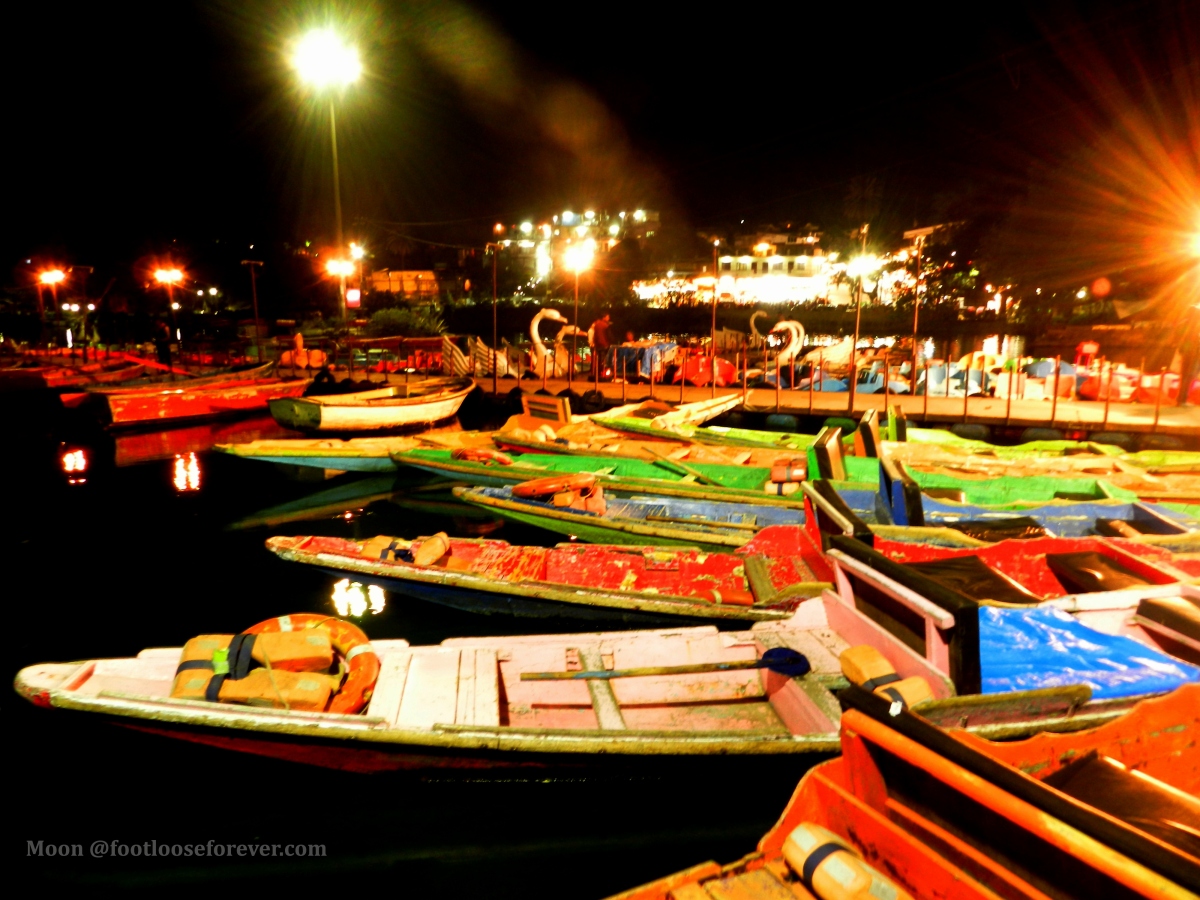
Mount Abu, being the sole hill station in this region, is a popular tourist destination. Vacationers and affluent local businessmen swarm in on weekends; hence it is an expensive place for shopping. Anyway, let’s come back to where we were. We reached Mt Abu just before sunset. After dumping our luggage at the hotel when we reached by the Nakki Lake it was already dark. I wish I had a boat ride in the lake. But boating is not allowed after sunset. 😦
Nakki Lake is a natural rainwater lake. The myth about the creation of this lake goes like this. Lord Bramha (of Hindu mythology) dug this lake with his nails. Nail is “nakhun” in Hindi and “nakki” in local dialect, hence the name. 🙂 With food stalls, eateries, cafes and clothing and handicrafts shops all around the decorated garden and entrance to the boat pier this is place to feel the pulses of Rajasthan’s lively hill station, Mt Abu. From dining to shopping to magic tricks performed by young boys – you’ll have many things to do and enjoy at Nakki Lake.
Next morning started our Mount Abu Sightseeing.
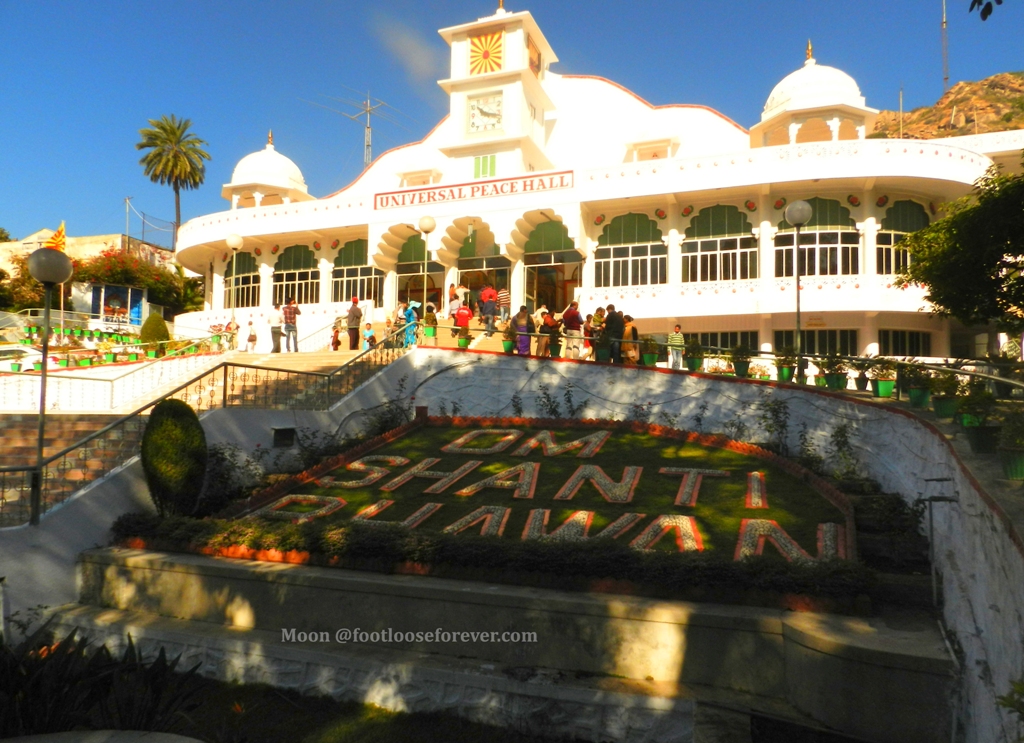
Our first stopover was Om Shanti Bhawan which has a huge assembly hall called the Universal Peace Hall. The institution providing meditation facility was established in 1983 with an objective of educating and enlightening people about peace, spirituality and Paramatma (meaning ‘the Almighty’ in Sanskrit).
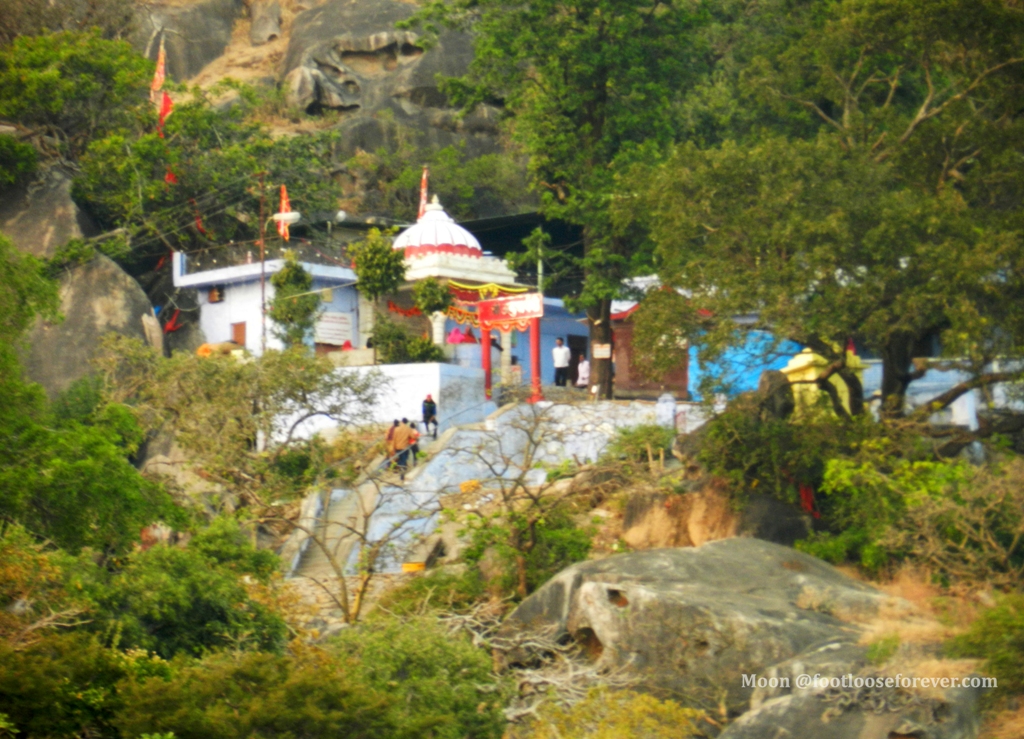
Adhar Devi Temple – The temple is situated on top of a hill and you need to climb 365 steps to reach there. It was a hard but rewarding task as the view from top is very nice. The temple is built along a natural cave has unique structural feature inside.
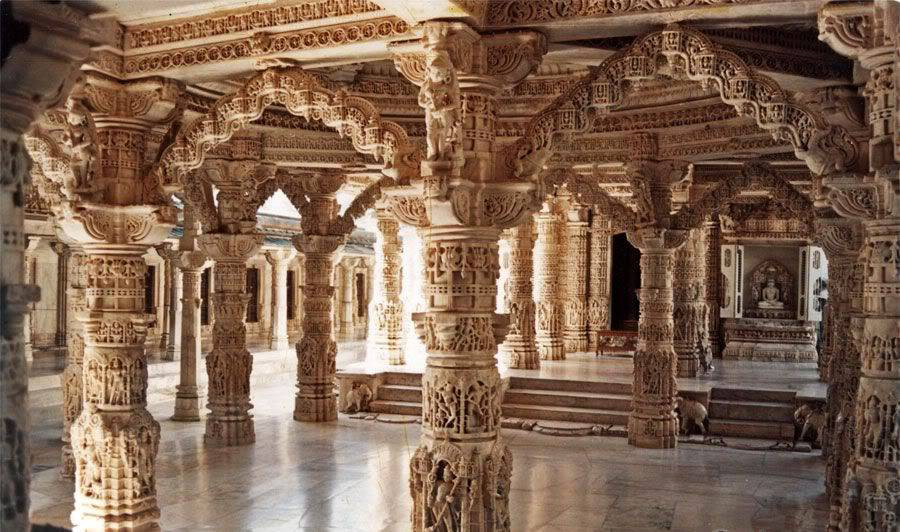
Dilwara Temple – This is the brightest jewel on the crown of Mount Abu. This Jain temple is famous for its stunning and exquisite marble carvings all over the interior walls, columns and ceilings. Unfortunately, the temple authority does not allow camera inside. Charges for camera and mobile deposit was Rs 50/- per person.
Achalgarh Fort – The ancient fort town of Achalgarh was not originally had the present name. It was initially built by the Paramara Dynasty in the early medieval period. Later it was renovated by Rana Kumbha but most of the structures are in dilapidated condition. There is a temple of Lord Shiva known as Achaleshwar Mahadeva temple where devotees still offer worship regularly. The taxis (jeeps) to Achalgarh are available from the stand near Dilwara Temple. Each taxi carries 6-8 passengers and fare is Rs 800.
The same taxi will also take you to Guru Shikhar, the highest point of Aravalli Range. The peak is about 5600 ft from the sea level. The journey to Achalgarh and Guru Shikhar was remarkable and so was the view from Guru Shikhar.
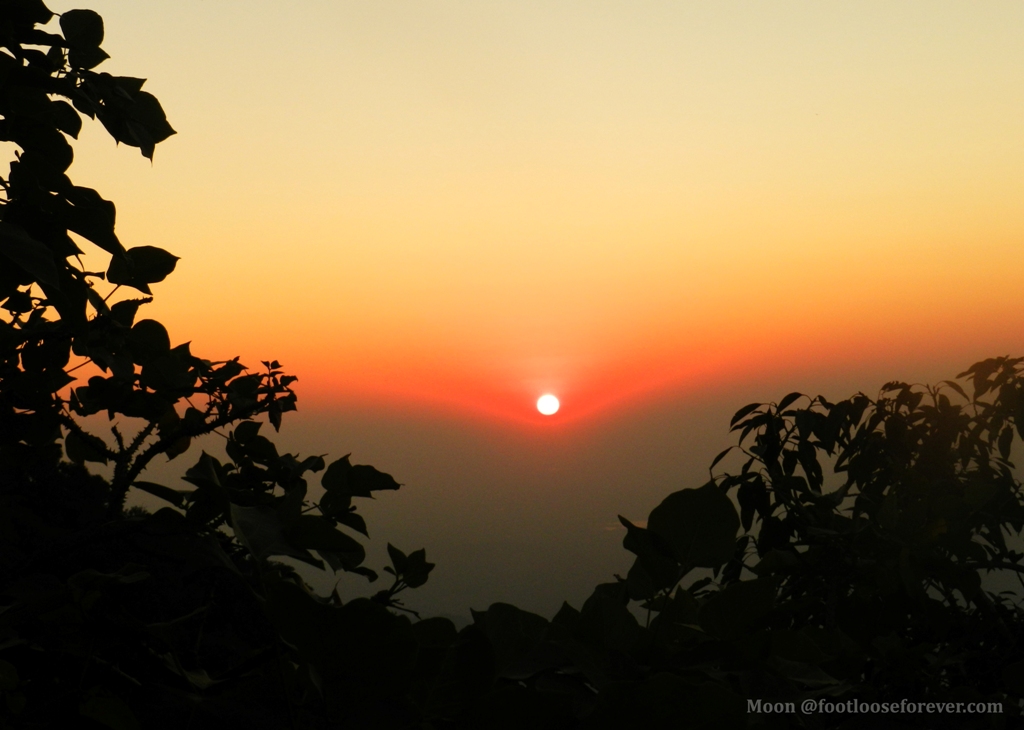
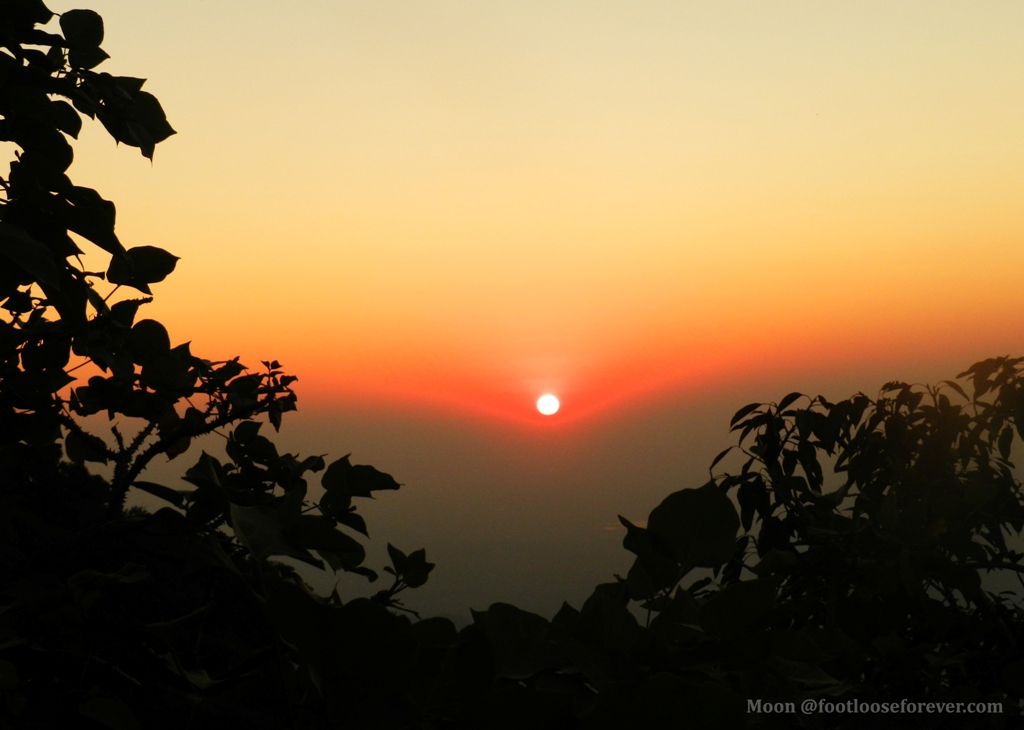
After a daylong sightseeing in Mt Abu we returned to our hotel for lunch. Post lunch session was most memorable because of sunset viewing from the Mt Abu Sunset Point. We reached early, before 5 pm, as our tour guide warned us that crowd will start gathering after 5:30 and you may not find a convenient position if you don’t go early. He was correct. When we reached at around 4:45 I merely saw a few couples here and there. I was so absorbed in enjoying the view down the hill I didn’t notice when the place was filled with so many people. To my surprise, the place was jam-packed with sunset viewers after 5:30 pm.
When the sunset was over we went to Nakki Lake before returning to hotel and thus ended my “gazab ka din” at Mount Abu. J In late November, the nights were cold in Mt Abu even though the days were hot just like any other places in Rajasthan. As the night grew older the wind became chillier and I went to bed with my socks and scarf on under the blanket. 🙂
By the way, before I stop here is the song for you.
Disclaimer: Dilwara Temple and Nakki Lake (day) images are taken from the internet.
Life is a tide; float on it. Go down with it and go up with it, but be detached. Then it is not difficult. ~ Prem Rawat
When I saw the theme of this week’s Daily Post Photo Challenge – Afloat the first thing came to my mind is ‘water’. I always wanted to learn swimming but somehow never got a chance. So, I envied anyone and anything that I saw floating effortlessly on water. 🙂 I wish I could do that someday. And now when I finally enrolled to a newly opened swimming club in our locality I know how amazing it feels to float on the water and let loose yourself and let the water take you along the flow.
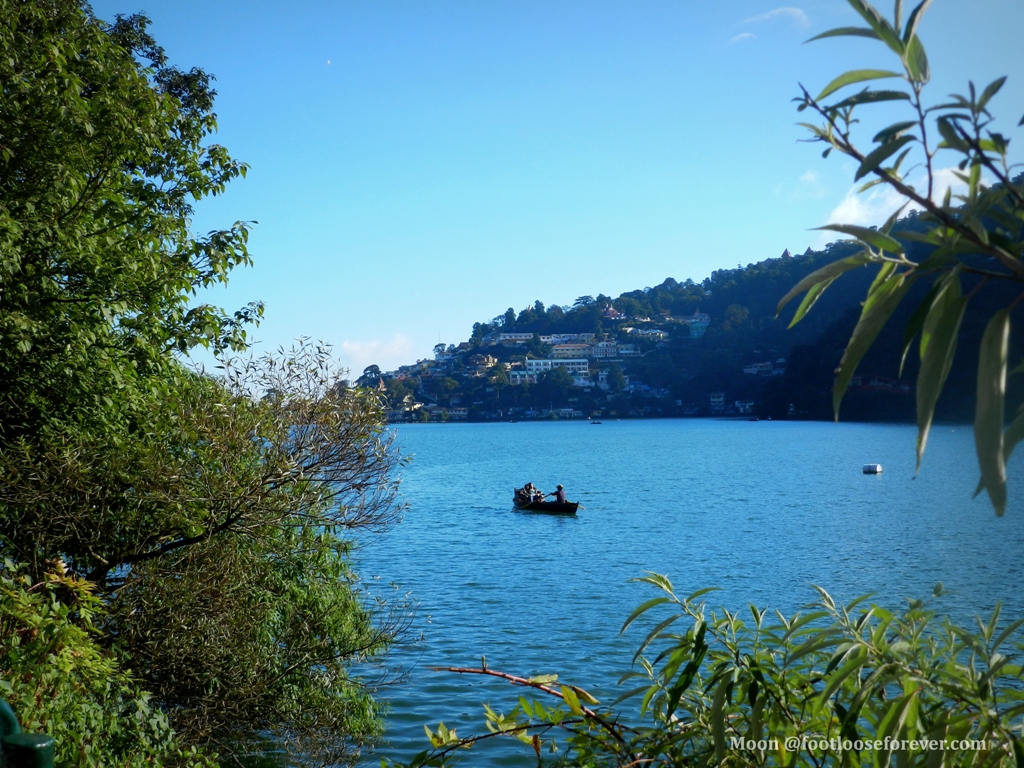
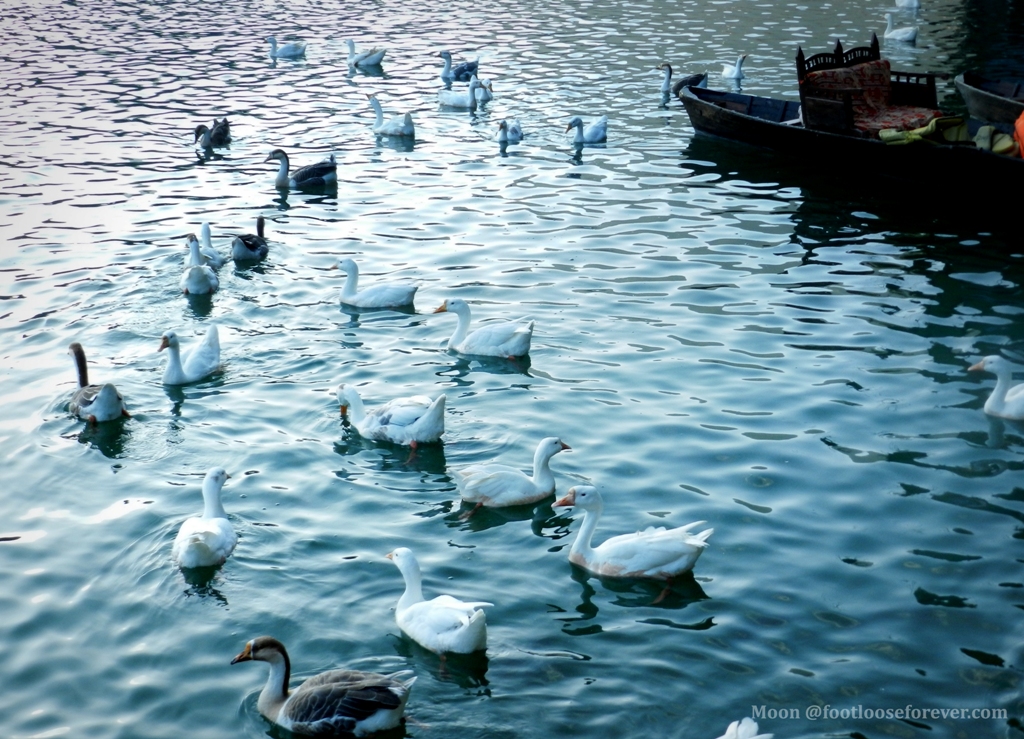
These two pictures are from the album of my Nainital Tour. It was a nice pastime for me to watch the geese swim in their own pace and…
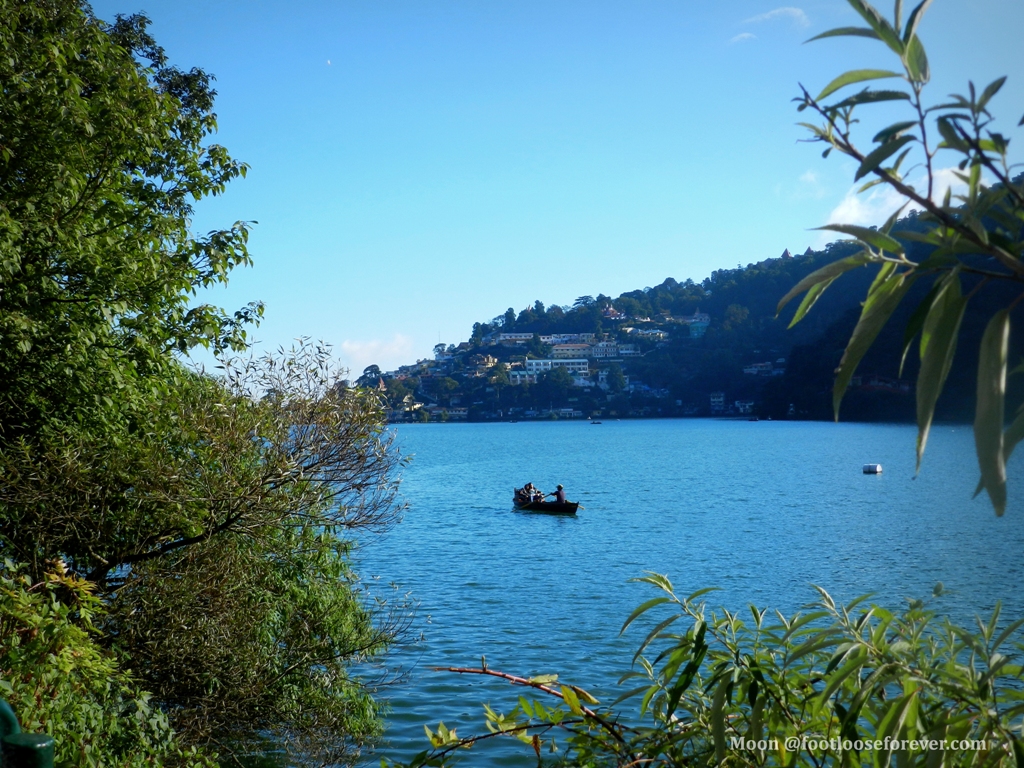
the boats afloat the turquoise water of Naini Lake with bewildered tourists aboard.
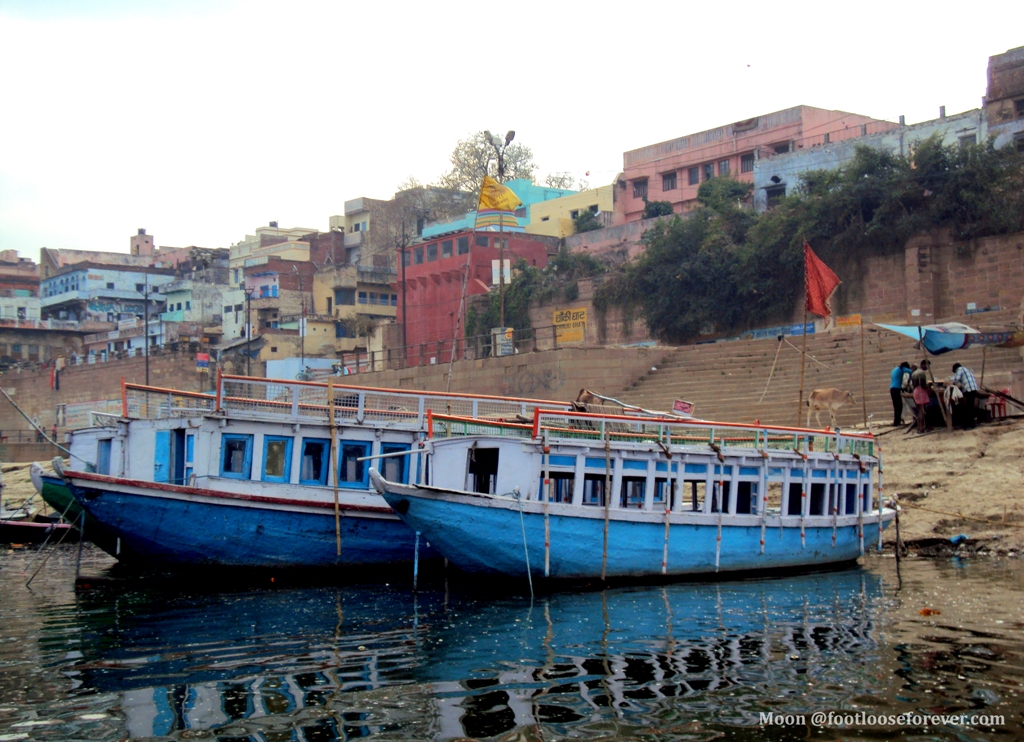
Boat school! In India? How does it look like? How does it work? Questions thronged my mind when I first heard about the Varanasi Boat School. But when I watched this video on the website of Do Right, I started believing in it. See how smile and hope brighten their faces when asked what they are learning in this boat school. However, before we learn more about the boat school in Varanasi let’s take a look at the present scenario regarding education in India. Perhaps it will help us understand the need for more such schools across the country and how such efforts can make a difference.
Education is the guiding light in the darkness of ignorance. It improves our thought process and helps us to think independently without coming under the influence of any social taboos, beliefs and religious and political pressure. The first step to education is literacy. Technically, literacy means functional literacy; knowing 3Rs – Reading, Writing and Arithmetic (basic level).
Unfortunately, India has the largest illiterate population (287 million) on earth according to United Nation’s latest Education for All Global Monitoring Report. The number almost equals the entire population of the USA.
After the enactment of Children’s Right to Free Education Act in 2009, Indian government took up various literacy programmes under the supervision of NLMA (National Literacy Mission Authority). The subsequent 2011 census report says the national literacy rate has grown to 74% (Male – 82%, Female – 65%) while the global rate being 84%.
Another disturbing fact is that India, despite having a large percentage of young population, stands 112th on Global Child Development Index 2012 (based on Education, Health and Nutrition rate among children). The rank dropped from a previous 103rd position in 2004.
The above stats are alarming! Lack of education is, perhaps, the biggest challenge in India at present.
Lack of education -> ignorance -> unprotected sex -> overpopulation -> poverty -> malnutrition, unemployment -> increasing crime rate
It seems like a chain reaction the root cause of which is ‘illiteracy’. Many poor families are reluctant in sending their children to school. Instead they would put them into work and make them earn for the family. This is the most painful thing to see children begging for alms on the street or child labourers who have sacrificed their childhood too early.
Therefore, free education for poor children is the need of the hour.
Perhaps it is a mammoth task for the government to improve educational infrastructure so that basic education can be provided for free to every child in the lower strata of the society and ensure a better life for them. The government is working although the success rate might not be satisfactory. But should we just blame it on the government and sit back thinking it’s not my problem? Or is giving alms to street children the solution?
Can’t we, the common people do anything to make a difference for our under privileged children?Yes, we can.
More private efforts and initiatives are needed to make India a better place. Varanasi Boat School is a unique endeavour by Mr Ajeet Singh and his NGO ‘Guria’. This innovative educational campaign has been named as – Do Right. This novel initiative is taken for a noble cause – to inspire underprivileged kids in learning and education and create an environment where learning will be fun for them.
Now you might think, “Why Varanasi and not any other place”? Well, the journey of doing right is not limited within the periphery of Varanasi. Do Right has started its journey from the Rann of Kutch. After that they have worked for the street children in Pune. Now they have reached Varanasi, the cultural heart of India with an aim to create an ideal learning environment for the city’s street children. If this learning model is successfully implemented in Varanasi it can be developed in other parts of the country in future.
Started in a small scale with small investment Varanasi Boat School has already proved that it has a lot of potential. But a magical transformation is needed to perform in its full potential. The school needs renovation and expansion with larger space and more books, toys and painting kits, which is beyond the capacity of individual effort.
How you can make a difference by doing the right
More funds are required to do the right for these children – to retain the smile that Do Right has brought on their innocent faces. You can help this campaign grow and succeed by donating any amount you want. You can also inspire your friends and acquaintances in donating for Do Right and create awareness for this noble cause by spreading the message in your social networks. Please visit www.doright.in for more details about the campaign.
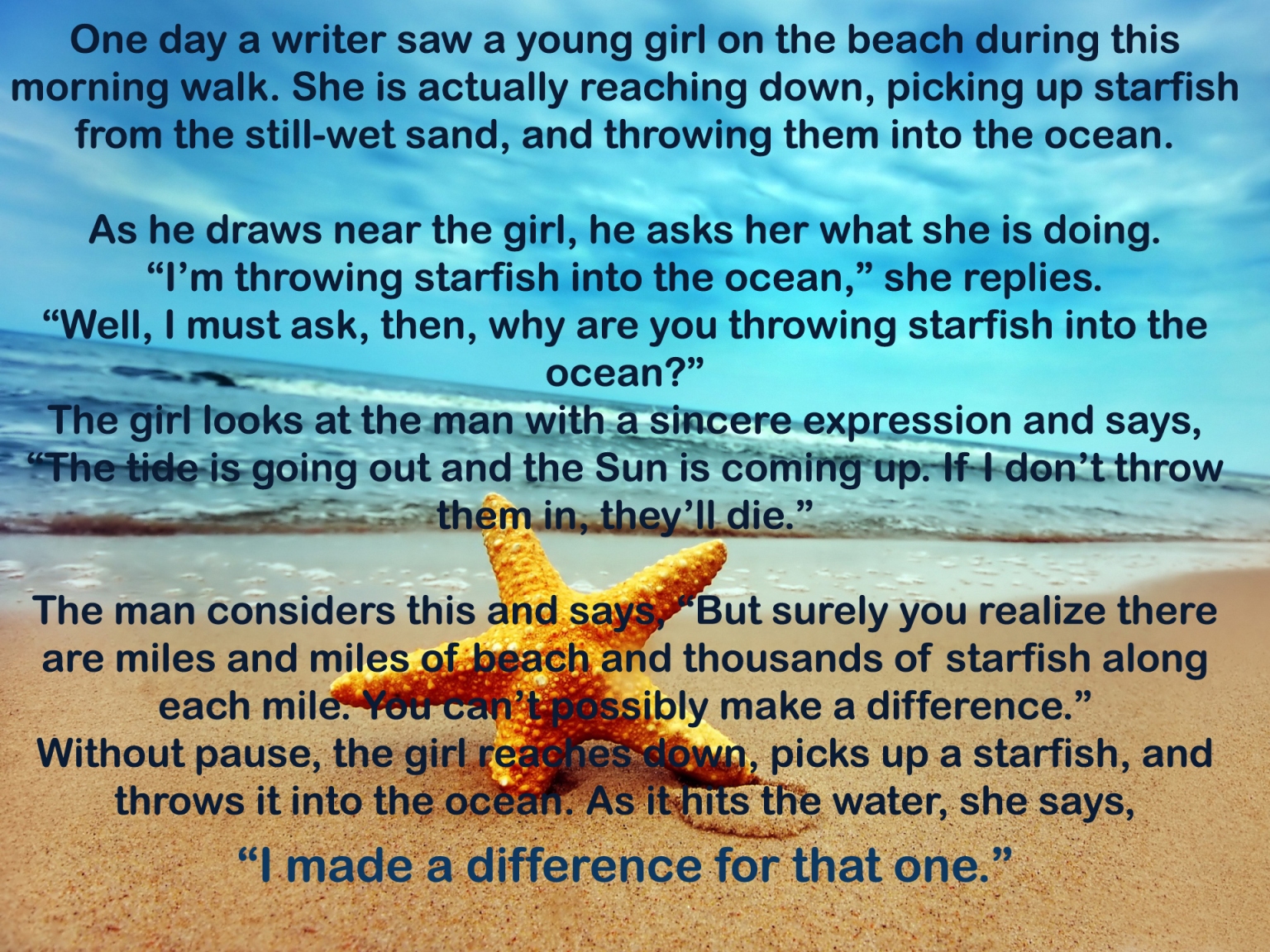
If you are still not confident that a small contribution can make a difference I would like to share something with you.
Udaipur was once the capital of Mewar Rajputana kingdom in southern Rajasthan. King Udai Singh II of Sisodia clan constructed this city in 1559 and shifted his capital from Chittorgarh to Udaipur as he felt the former was vulnerable to enemy attack. He needed a more secure location which he found near Girwa Valley, along the Aravalli Hills. This new capital city of Mewar was named after him. With the beautiful Lake Pichola on the backdrop Udaipur is now a romantic destination dotted with exquisite medieval Rajput architecture. The city is built around huge lakes, namely – Fateh Sagar (‘sagar’ meaning lake in vernacular), Swaroop Sagar, Udai Sagar and Pichola to lend its popular names such as the “City of Lakes” or “Venice of the East”.
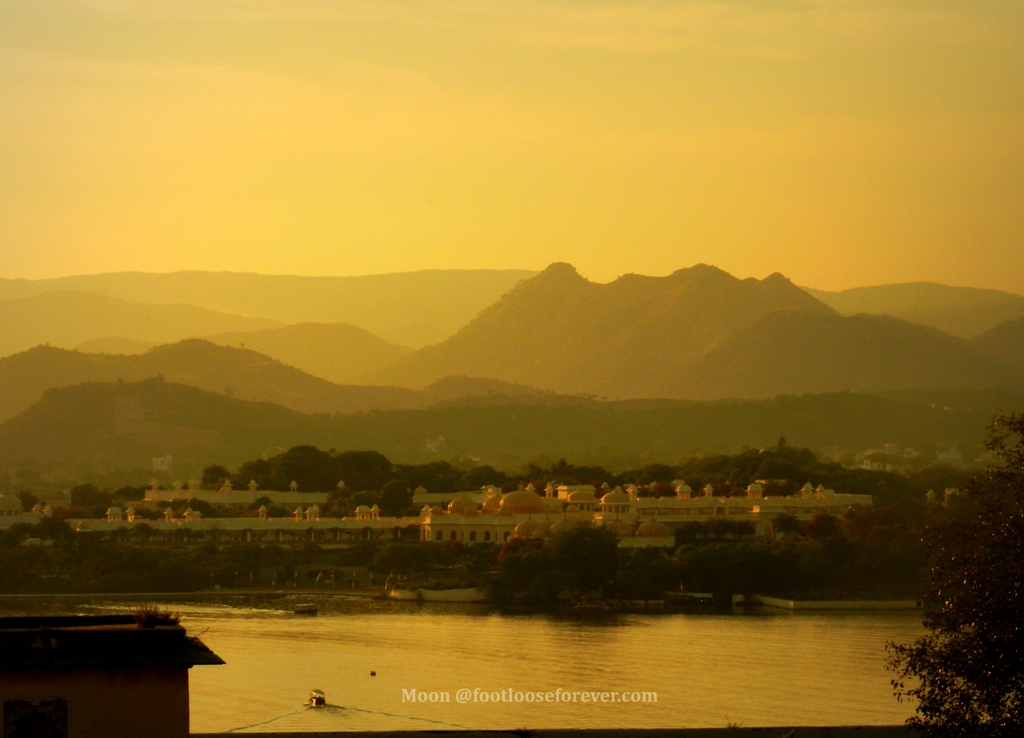
Udaipur Lake Palace in the middle of Lake Pichola
Where to Stay
As I have already mentioned in my previous post that we were destined to Udaipur from Pushkarvia Chittorgarh. It was a long, tiring drive under the scorching sun of Rajasthan, even in late November. After a few hours of Rambling in Ruins of Chittorgarh we were headed towards Udaipur. It was almost 9 pm when we reached HotelDimple International. From my experience I would suggest everyone to avoid this hotel. The door locks were defective. Inside the room the bed linens and bathroom were dirty. We asked the staffs to change the linens and what we got in exchange were similar dirty stuffs. This was the only hotel where I had such bad experience in my entire Rajasthan tour. Our tour was operated by a travel agency. Should I booked hotels myself I would never choose this hotel based on only two reviews on TripAdvisor. However, there are a number of budget hotels in Udaipur that offer satisfactory service. You’ll get a decent accommodation within Rs 2000.
Things to Do and See in Udaipur
Udaipur is a historical place full of royal palaces and architecture to explore and admire. The lakes and gardens add to its historical charm while offering additional options for tourists to spend quality time there. Sahelin-Ki-Bari (Garden of Maidens), Chetak Smarak (Memorial of Chetak, the famous horse of Rana Pratap, the King of Chittor), Sukhadia Circle and Nehru Island Park are such places in Udaipur.
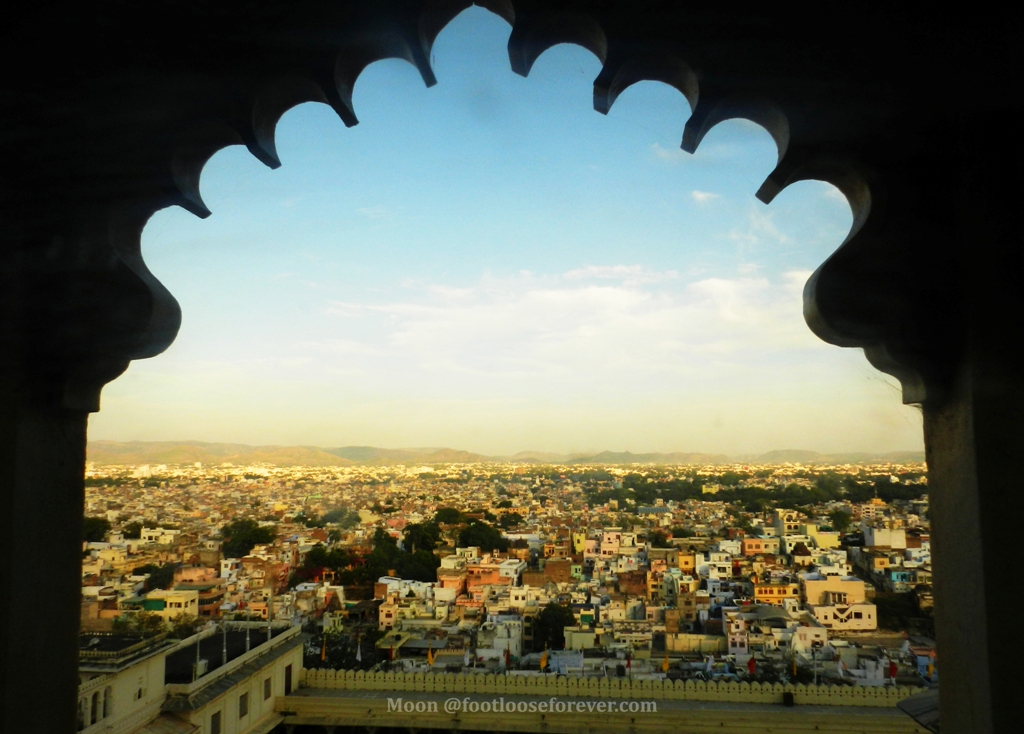
Udaipur City as viewed from the balcony of City Palace
Chetak Smarak
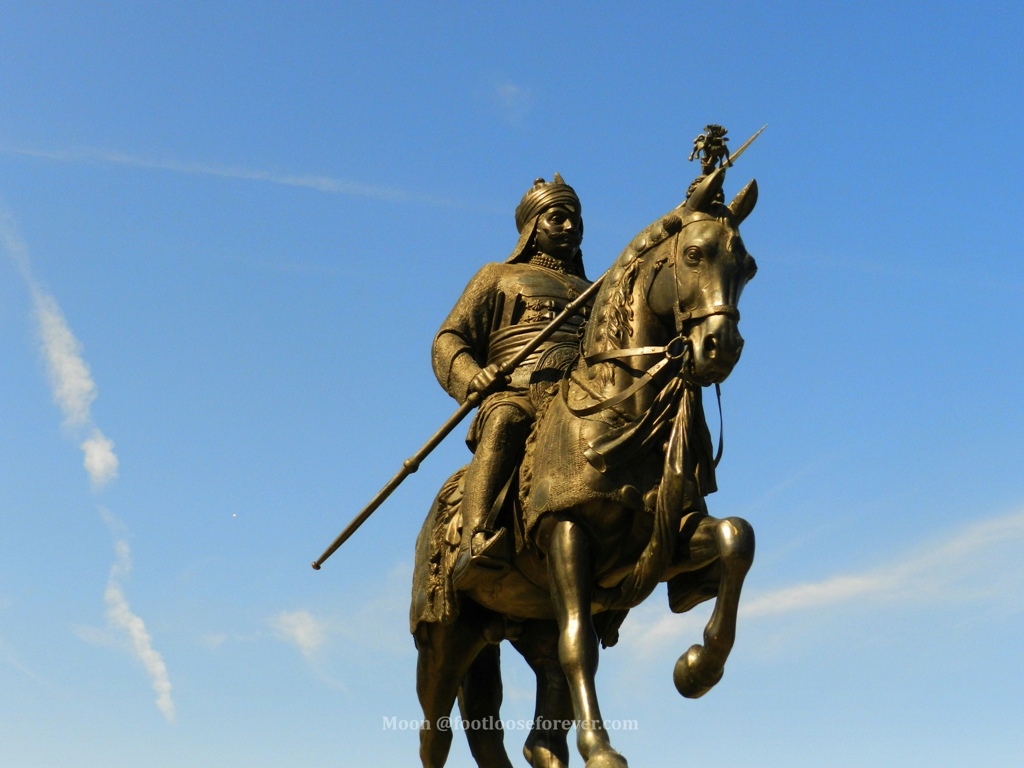
Chetak Smarak is a landscaped garden with a magnificent life-size bronze statue of Rana Pratap astride his horse, Chetak. You must be wondering why they built a memorial for a horse. Well, Chetak was not an ordinary horse. He was a very big, powerful horse. He saved Rana Pratap’s life in the battle of Haldighati. When Mughal army, under the command of Marwar king Man Singh, outnumbered Rana Pratap’s army and Rana Pratap had to retreat a severely wounded Chetak (with one leg chopped off) carried Pratap away to a secure place and breathed his last. Since then he has become a legend. By the way, entry fee to the garden complex was Rs 45.
The bronze statue of Rana Pratap and Chetak in Chetak Smarak
Boating in the Lakes
This was my second best experience in Udaipur. First is obviously visiting Udaipur City Palace. 🙂 Boats here are large motorboats where the boatman took a group of 15-20 people at a time. Twenty minutes boat ride in Lake Fateh Sagar cost Rs 100 per person. You can also enjoy a royal boat cruise to Udaipur Lake Palace in Lake Pichola.
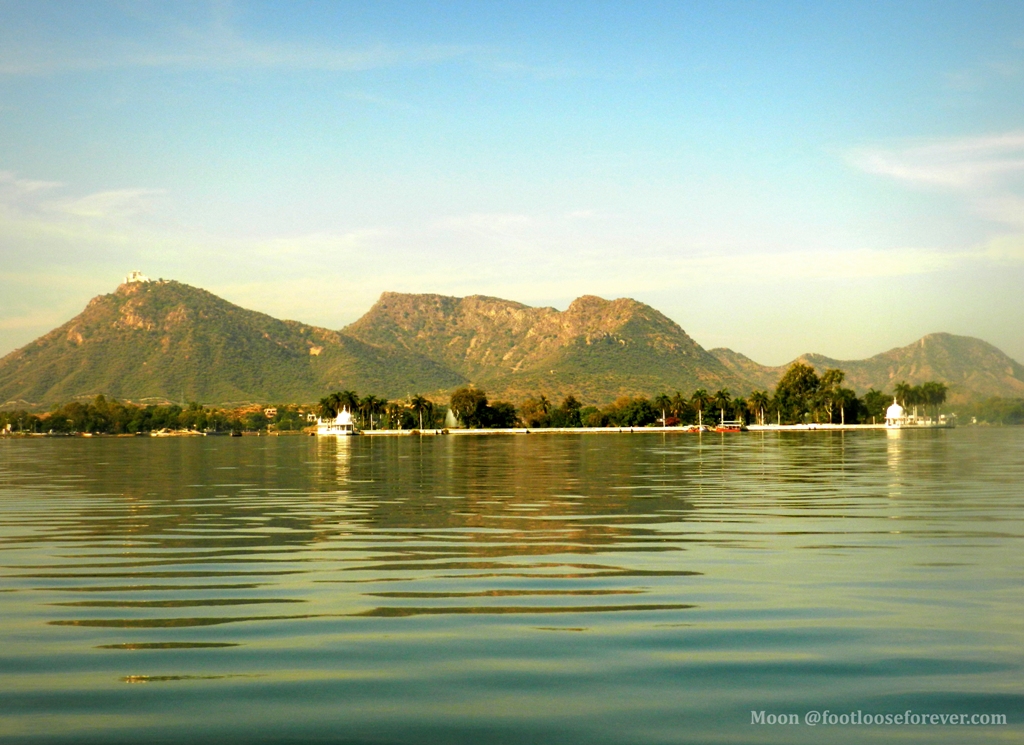
Fateh Sagar Lake
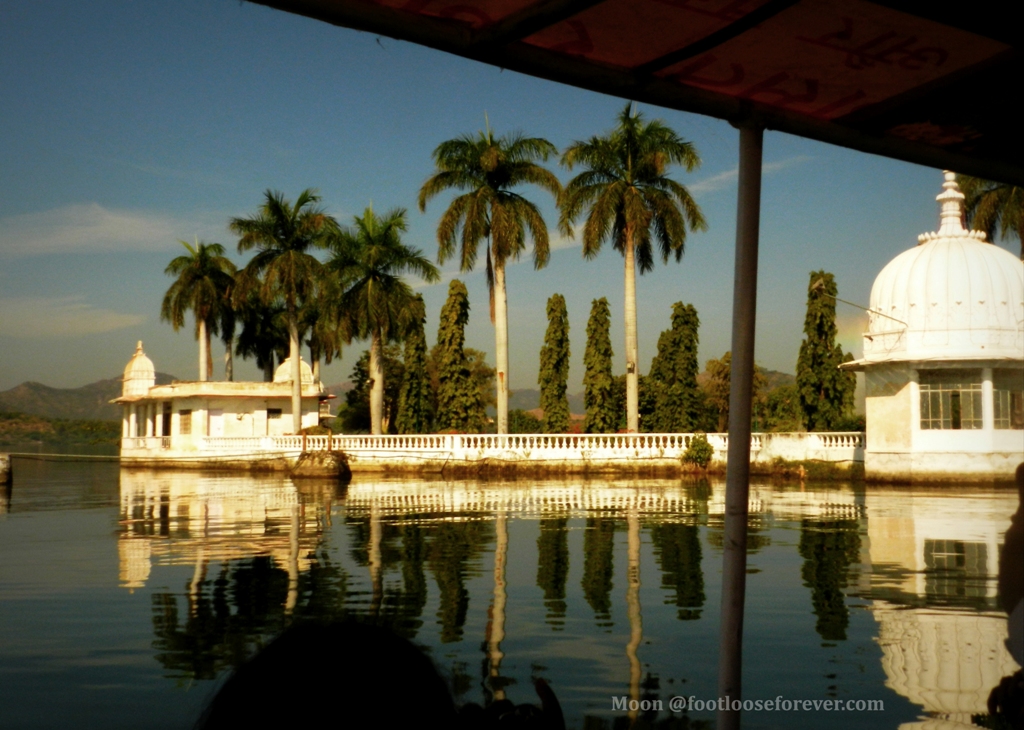
Nehru Island Park
Nehru Island Park is an artificial island garden situated amidst Fateh Sagar. Our boat went close to the garden. Close enough to take pictures but not enough to disembark. So, I only have this for your eyes. 🙂
Nehru Island Park in Fateh Sagar
Sahelin-ki-Bari
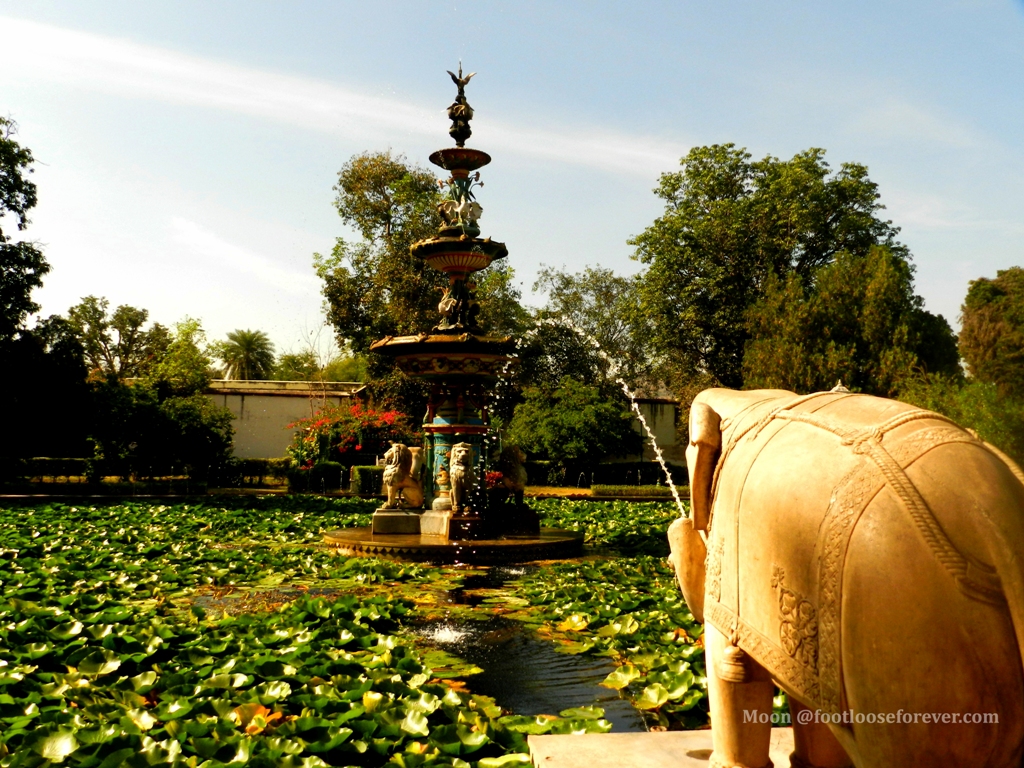
Sahelin-ki-Bari or the Garden of Maidens is a beautifully decked garden with lush plantation, lotus pools, fountains and canopy of trees. The guide told us that the garden was created for the princess (the daughter of Maharana Sangram Singh) as she wanted a cool place to spend summer with her maiden attendants (‘saheli’ in local language), hence the name Sahelin-ki-Bari (‘bari’ refers to ‘place’). The garden complex also houses a museum.
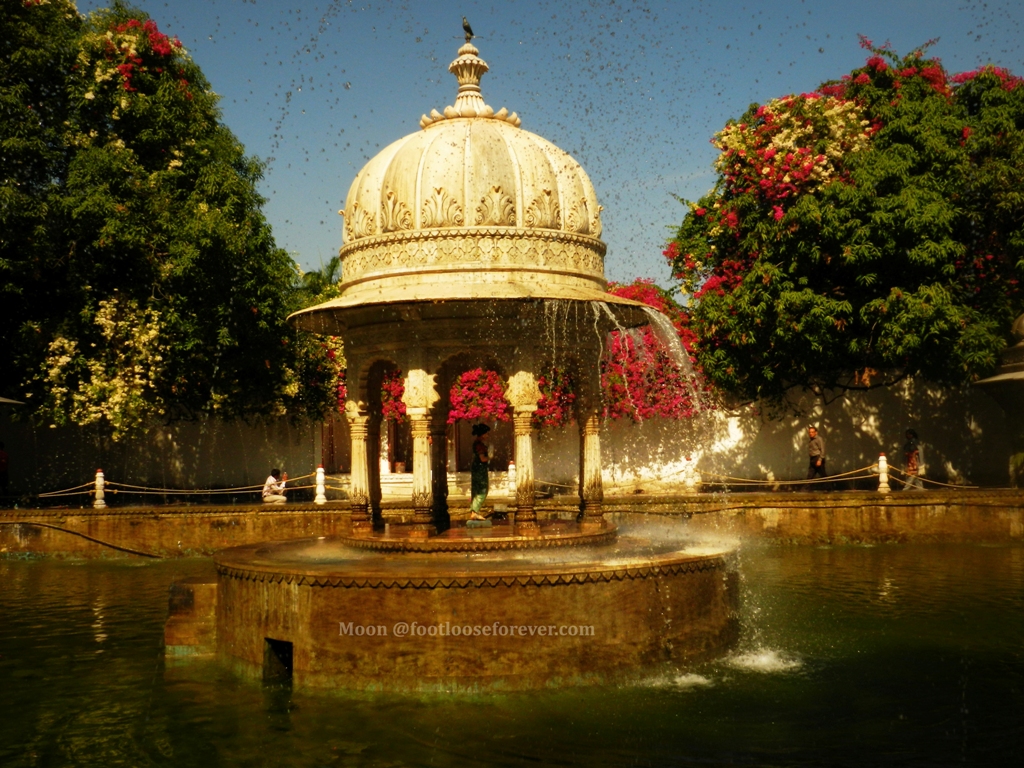
Marble fountains in Sahelin-ki-Bari
The specialty of the fountains in this garden is that they are continuously flowing without the use of any pump or machine. The fountains are fed by the water of Lake Fateh Sagar which is situated on a higher plane than the garden. Due to the difference in surface level the waters naturally cause pressure when directed through channels down to the garden. Amazing…isn’t it! 🙂
Lotus pool and fountains in Sahelin ki Bari
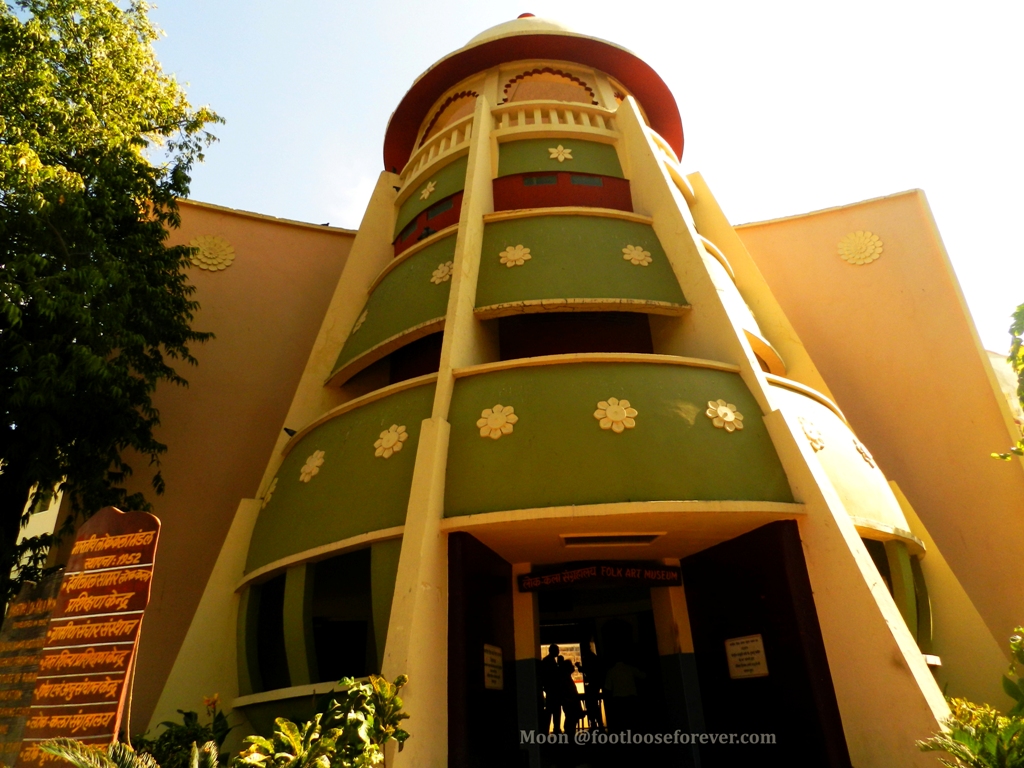
Bharatiya Lok Kala Mandal
Rajasthan and puppetry are inseparable. Stringed puppet dance is an integral part of Rajasthan’s culture since ages. It was one of the popular modes of entertainment in olden days. The traditiona is still alive in rural Rajasthan. In Bharatiya Lok Kala Mandal, a governmental institution of art and culture, you can watch puppet shows and get an idea of Rajasthan’s rich tribal art and crafts. We enjoyed a short 15-20-minute puppet show which was really very amusing.
Bharatiya Lok Kala Mandal – the centre of Rajasthan’s folk art and culture
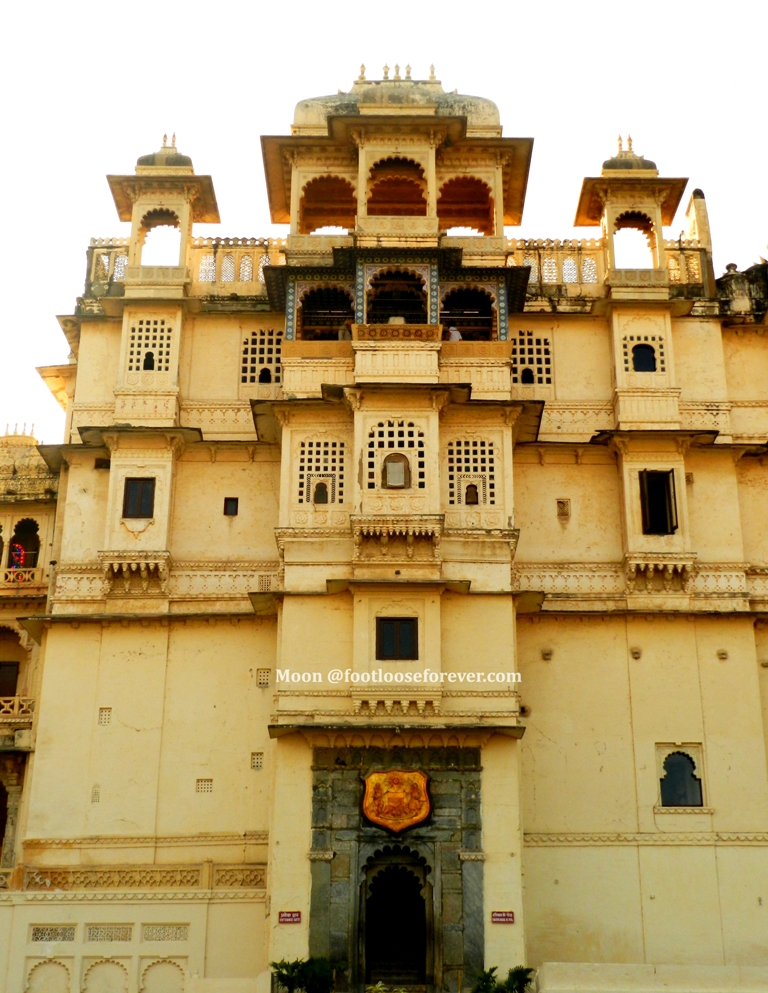
City Palace
For me this was the most coveted part of our Udaipur sightseeing tour. The 400-year-old iconic City Palace was built by King Udai Singh II as his royal residence and administrative office. Later his ancestors made addition and extension of the main palace building to give it the present look and volume.
Palatial facade – City Palace, Udaipur
The palace architecture is a combination of Rajput and Mughal styles. The City Palace offers a spectacular panorama of the entire Udaipur city from its porches. As you step inside, you find a series of glamorous mahals (palatial residences) that are maintained as they were in time of Rajput monarchy. For your information, entry charges to City Palace was Rs 115 per person and Rs 225 for camera (optional). Remember that you need a guide to explore the palace. Guide’s charges for a group of 21-30 people was Rs 350/- in total.
This slideshow requires JavaScript.
Kumbhalgarh Fort
Built by Rana Kumbha in the 15th century Kumbhalgarh Fort is one of the six famous ‘Hill Forts of Rajasthan’ and a UNESCO World Heritage Site. This spectacular fort is located 82 km northwest from Udaipur. The entire fort perimeter is surrounded by a thick, strong brick wall stretching 36 kilometers along the hills. This is said to be the world’s second longest wall after the Great Wall of China.
Kumbhalgarh Fort – A UNESCO World Heritage Site (Image: UdaipurNewsToday)
Sajjan Garh Palace
Sajjan Garh Palace, also called ‘Monsoon Palace’, is a royal residence nestled on top of Aravalli Hills overlooking the Lake Fateh Sagar. Named after its creator Maharana Sajjan Singh this palace was built in 1884 to watch the arrival of monsoon clouds in the region. The place offers breathtaking panoramas of Udaipur’s lakes and neighboring countryside.
Sajjan Garh Monsoon Palace (Image: makemytrip)
Well, that’s not all. There are much more to see and experience in a versatile, culturally rich place like Udaipur. On our way back from the City Palace we visited Jagdish Temple, which is located in the vicinity of the palace.
Shopping in Udaipur
I saw several textile and art and crafts shops lined up the streets leading to the City Palace. But if you want to but authentic Rajasthani artifacts, especially exclusive jewellery and decorative items made of oxidized metals Rajasthali is the place to go. This is the only handicrafts emporium in Udaipur owned by the Rajasthan Government. After a long, tiring day of sightseeing in Udaipur we came back to hotel. That night I couldn’t sleep well because the next day was meant for a journey to famous Mount Abu viathe historic battlefield of Haldighati.
Haldighati
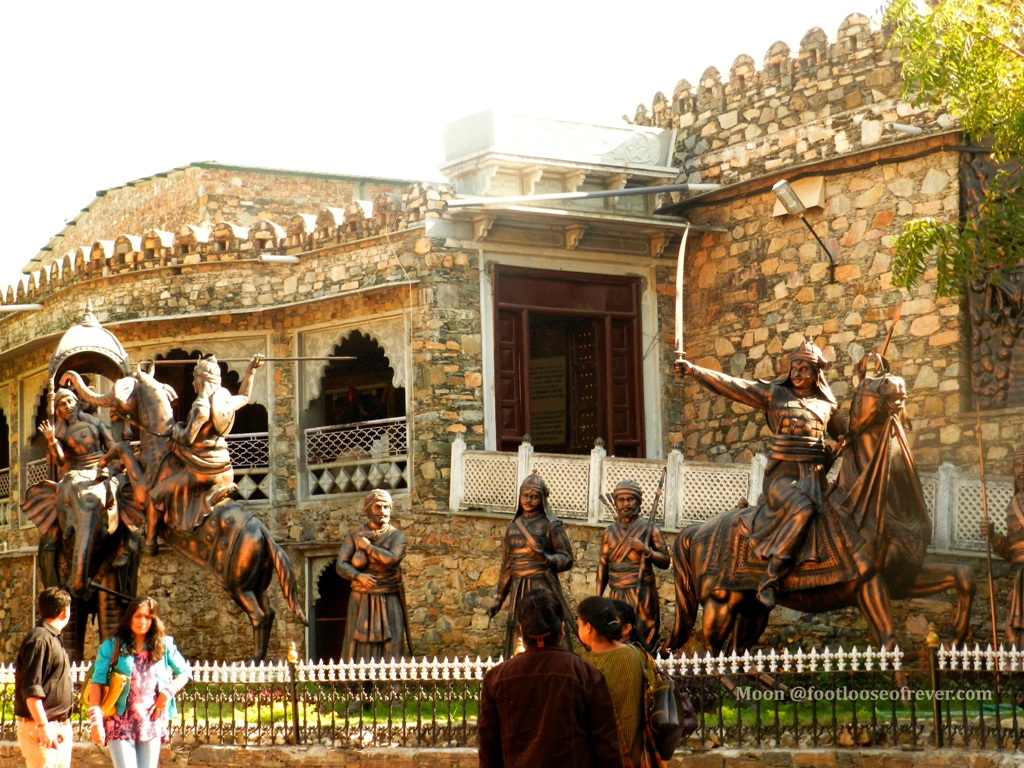
Haldighati, only 40 Km from Udaipur, houses a museum where you’ll see large statues of Rana Pratap and Raja Man Singh, right in front of the museum building. Inside, an array of life-size clay models depict the various incidents of the historic battle and chivalry of Rana Pratap, the eldest son of Rana Udai Singh II. The museum also exhibits Rajasthan’s rural life using clay models.
Rana Pratap and Man Singh in the battle of Haldighati
So, that’s all about Udaipur from me. While I had seen some of its main attractions many were left behind as we didn’t have enough time. But Rajasthan is a place where I would love to come back again and again and it will never cease to amaze me.













 Footloose Forever