A travel blogger from Kolkata, India
Hi, my name is Moon. I am a content developer by profession and a travel blogger by passion. As a traveler, I want to explore every nook and corner of my beloved country India and beyond and share my travel stories on my blog. I have written for Hipmunk. You can check out more of my Hipmunk Hotels and Destinations posts here: https://footlooseforever.com/category/travel/usa-hotels/
Rajasthan, the desert land with its exotic natural landscapes, architectural grandeur and rich cultural heritage, has always been my dream destination which I happened to explore last year. It was a happy journey through the land that offers warm welcome to tourists from all over the world. Given the recent incidents of atrocities against women I found it is one of the places in India where women travellers can feel safe. People here, are pretty accustomed to seeing visitors. Rajasthani people love their tradition and at the same time they are respectful to tourists.
My journey in Rajasthan started from Jaipur and ended in Jodhpur. The cities like Jaipur, Udaipur and Jodhpur have immense historical importance and numerous stories to tell. Today, the Pink City Jaipur is a fusion of modernity and tradition. The old architectural edifices and the historic palaces will remind you of the rich cultural and artistic excellence of Rajasthan. Mount Abu with its pleasant weather and beautiful vacation homes is a popular holiday retreat for local businessmen. Jaisalmer gives you a feel of rustic Rajasthan while Pushkar is a spiritual journey.
However, Pushkar is also a good place for shopping. You can buy dress materials, Indo-Western as well as traditional Rajasthani dresses, silk scarves, local made tote bags, mirror-work purses, hand-crafted showpiece, jewellery and many more at reasonable rates. If I try to express my thought about Rajasthan it’s not possible to sum it up in a single article.
For me, Rajasthan means celebration of colors (in every aspects of life starting from accessories to artifacts to home decor).
Rajasthan means architectural extravaganza.
Rajasthan means a royal aura.
Rajasthan means rich tradition.
Rajasthan means soulful folk music.
Rajasthan means enthralling folk dances.
Image: wikimedia.org
Rajasthan means amusing puppet shows.
Rajasthan means beautifully adorned camels on the roads.
Rajasthan means spicy foods to stimulate your taste buds. I think Rajasthanis have a perpetual love for chili in their food. 🙂
Image: cooks.ndtv.com
In short, Rajasthan means diversity in natural, spiritual, artistic and cultural way which a traveller must experience once in life.
P.S: For more info and images of Rajasthan Travel check these out:
Hum jo chalne lage chalne lage hain yeh raaste/ aa ha… manjil se behtar lagne lage hai yeh raaste/ Aao kho jaaye hum Ho jaaye hum yun lapata /Aao milon chale jaana kahan na ho pata…
(Meaning: The road also keeps going as we continue our journey/It feels the journey is better than the destination/ Let’s get lost /Let’s travel with the road not knowing where to go)
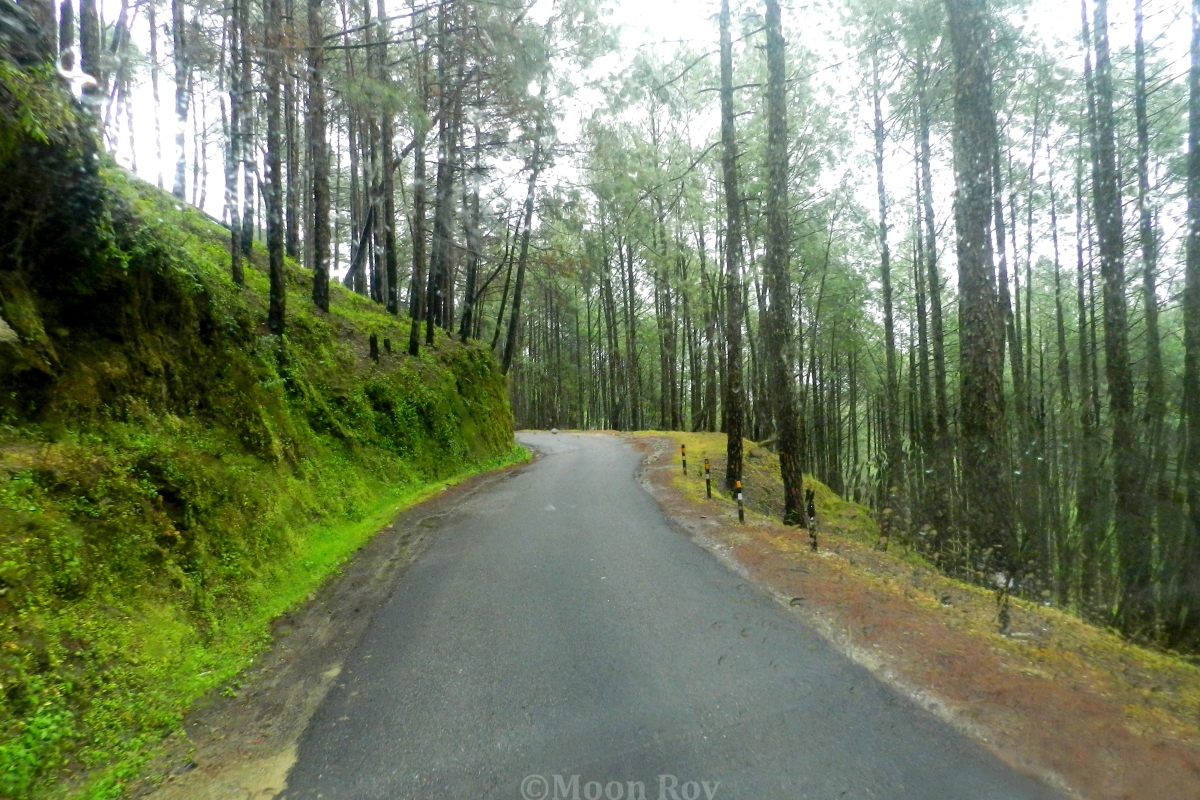
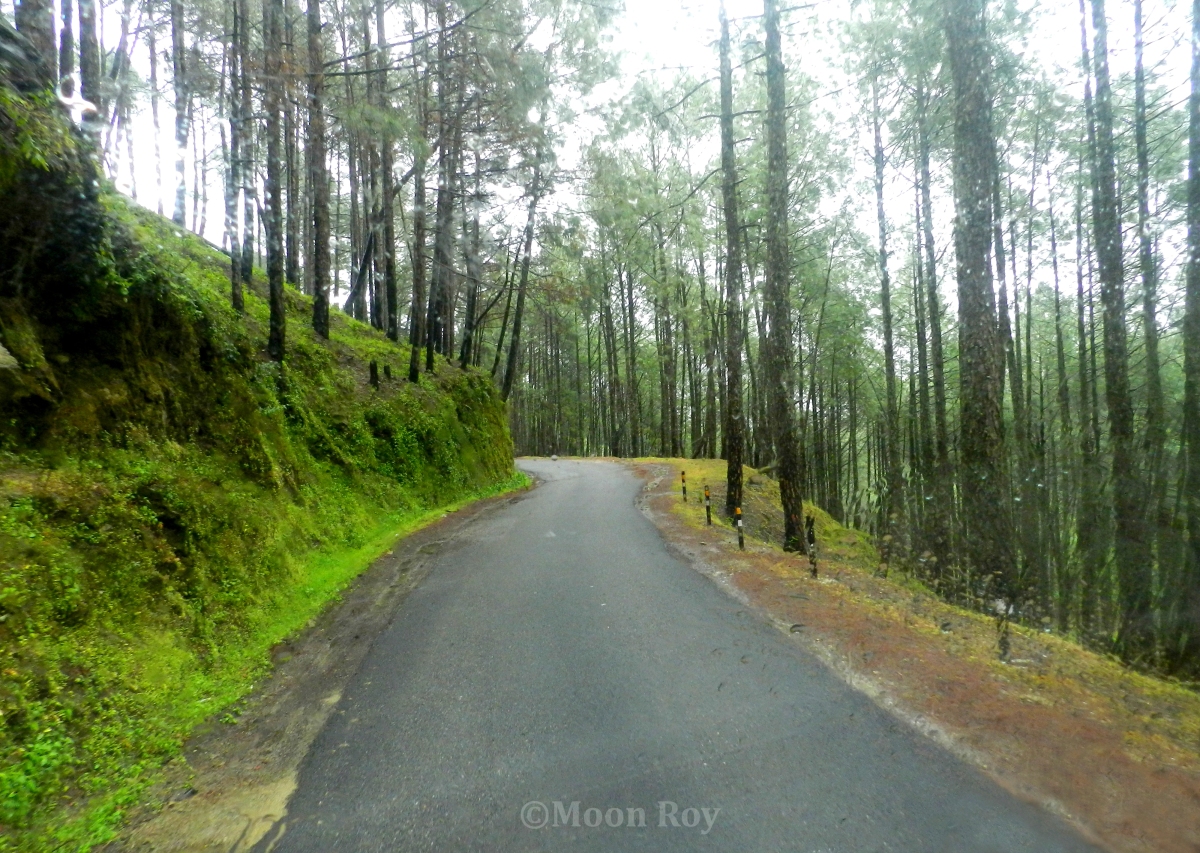
The song from my favorite Hindi movie Jab We Met was buzzing in my ears. With winding hilly road as far as eyes can see, pines and cedars lining the road and sunshine on my shoulder (especially after two days of incessant rain) what else I could think of! It was a pleasant, sunny morning. We were headed for Almora after spending the last night in Choukori. Luckily, I could manage the front seat right in the driver’s cabin to enjoy the journey to the fullest.
Sometimes the journey seems better than the destination.
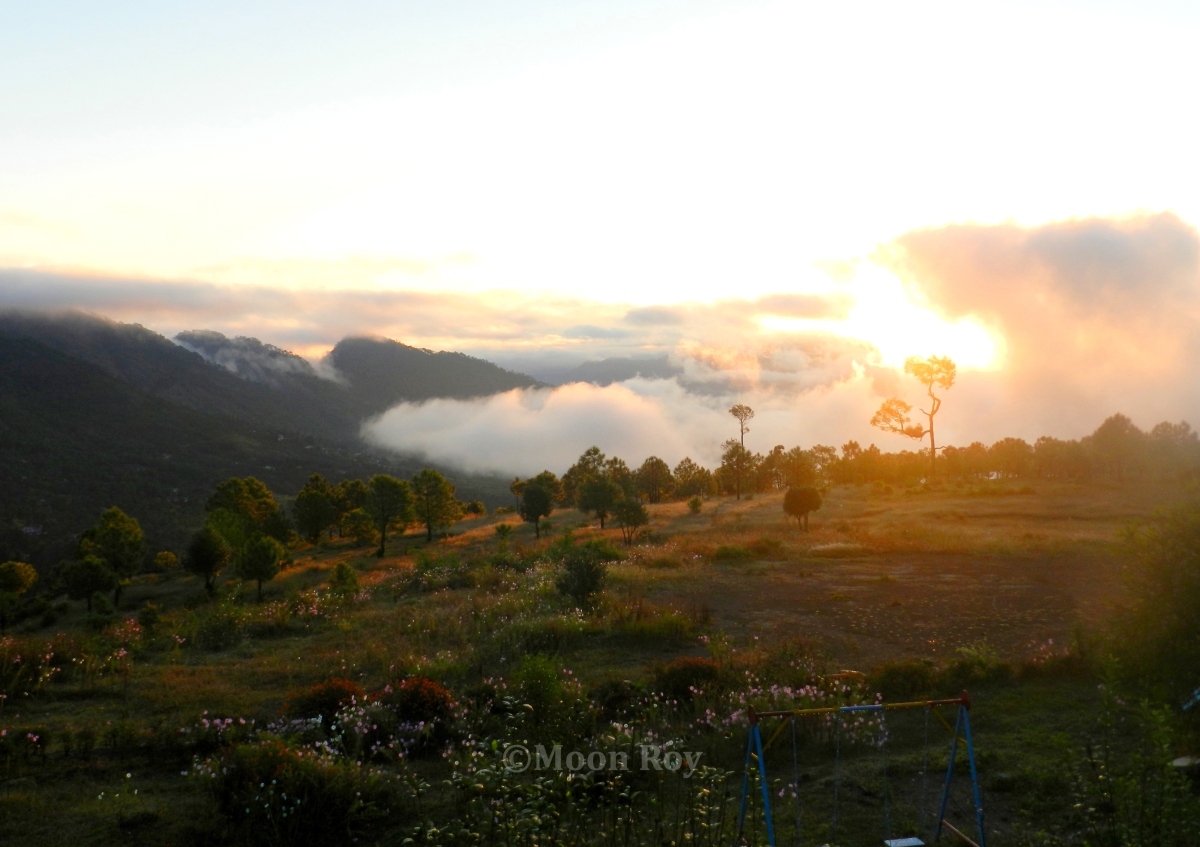
Earlier that morning… we got up at 6:30 and rushed to the balcony of the hotel to get a glimpse of sunrise. It is something you must experience in Choukori, a secluded hill station in Almora District of Uttarakhand. But ‘thanks’ to the ‘Weather God’ we were again deprived of this natural phenomenon, just as we were in Kausani and Ranikhet. When the sun finally peeped out from behind the thick cover of clouds it was already 7:30. 😦
When the sun finally peeped out it was already 7:30
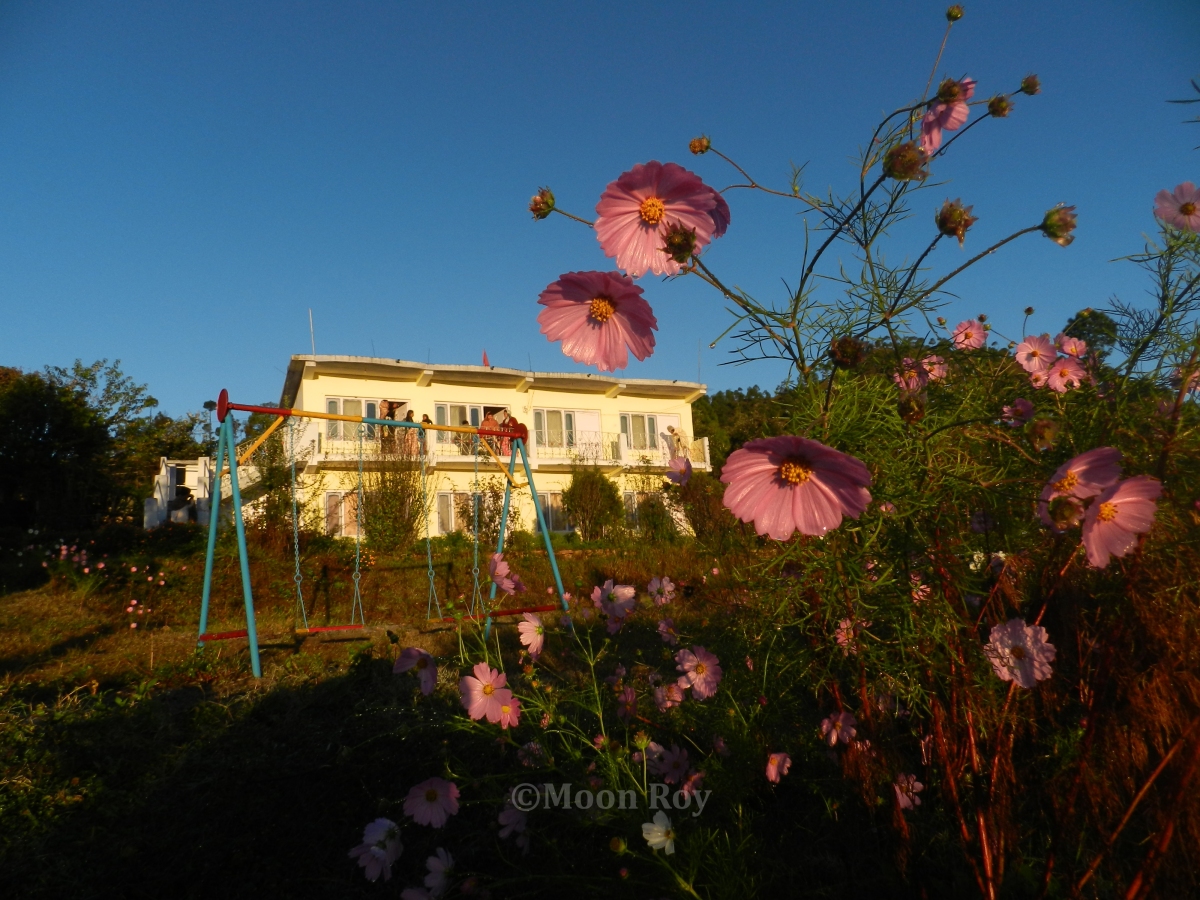
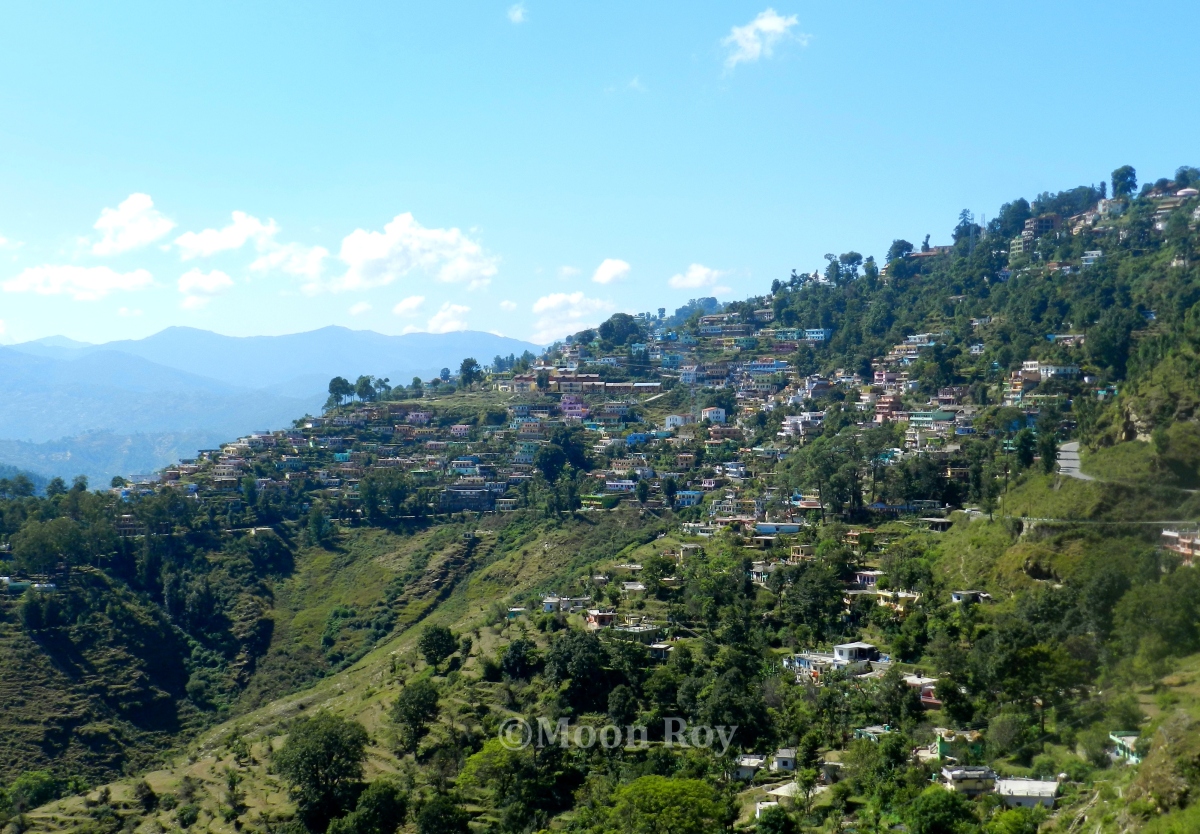
Nevertheless, Angan Resort in Choukori was a beautiful place to stay. There were groves and bushes all around. The garden was in full bloom with cosmos, marigolds and dahlias. The green slopes dotted with cottages created wonderful vista in the soft sunlight.
That’s our resort in Choukori
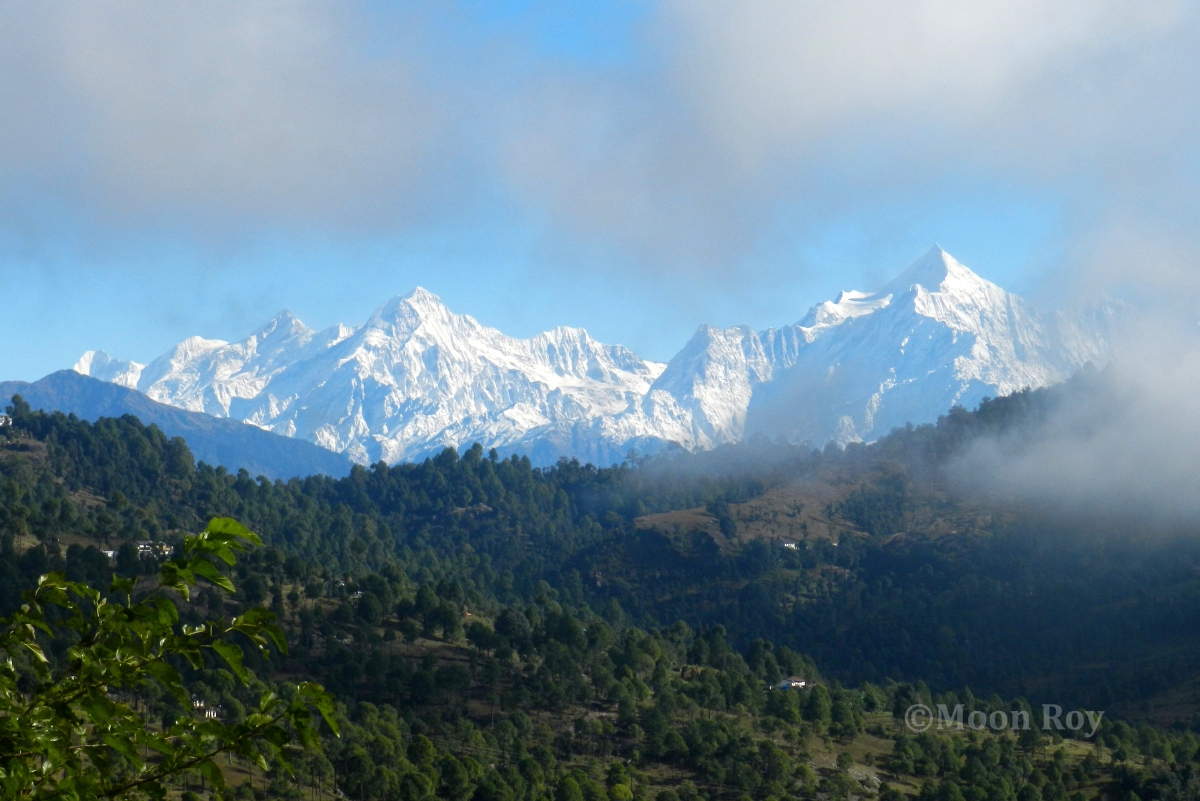
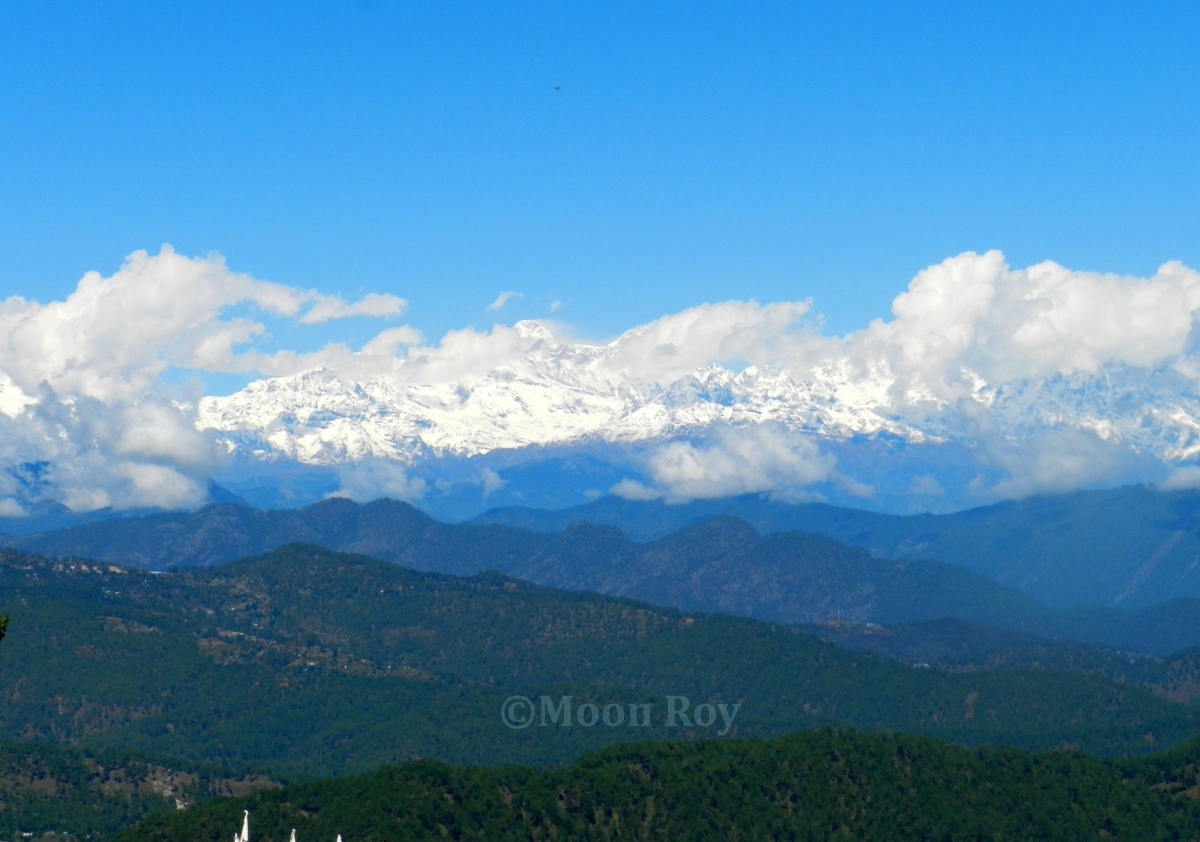
But the ultimate joy was yet to come. As the morning grew older the mist dissolved and the sky became clearer. The Himalayan peaks – Nandakot, Panchulli, Trishul – all were shining bright in the daylight. It seemed that the pastures, the hills and the resort – the entire place was surrounded by an array of snow-capped peaks. It was AMAZING!
Just one day ago it was really difficult to imagine a sunny day like this. Weather changes so fast!
Snow white Himalayan peaks were shining bright in the sunlight
The previous day, Kausani to Choukori has been a long journey via Gandhi Ashram, Baijnath Temple and Bageshwar where the rivers Gomati and Sarayu meet.
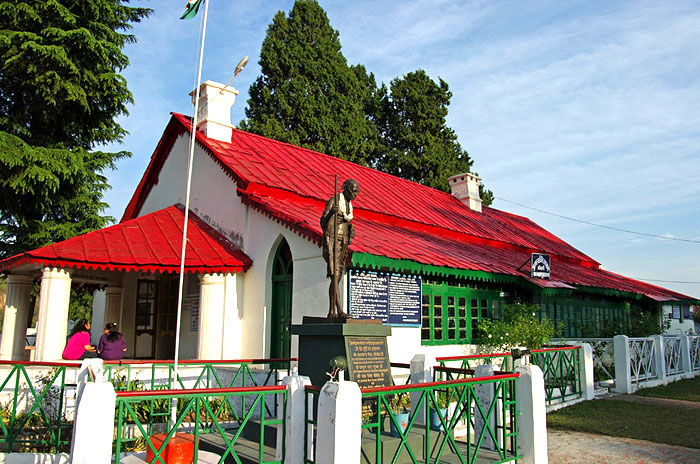
Gandhi Ashram also called Anasakti Ashram (‘Anasakti’ refers to the spiritual state of selflessness and non-attachment from materialistic pleasure) where Mahatma Gandhi wrote ‘Anasakti Yoga’ (The Gospel of Selfless Action). The ashram has a museum displaying some of the rare photographs of the Mahatma in various stages of his personal and political life.
Gandhi Ashram in Kausani – Image: Jean Pierre Chanudaud (Flickr)
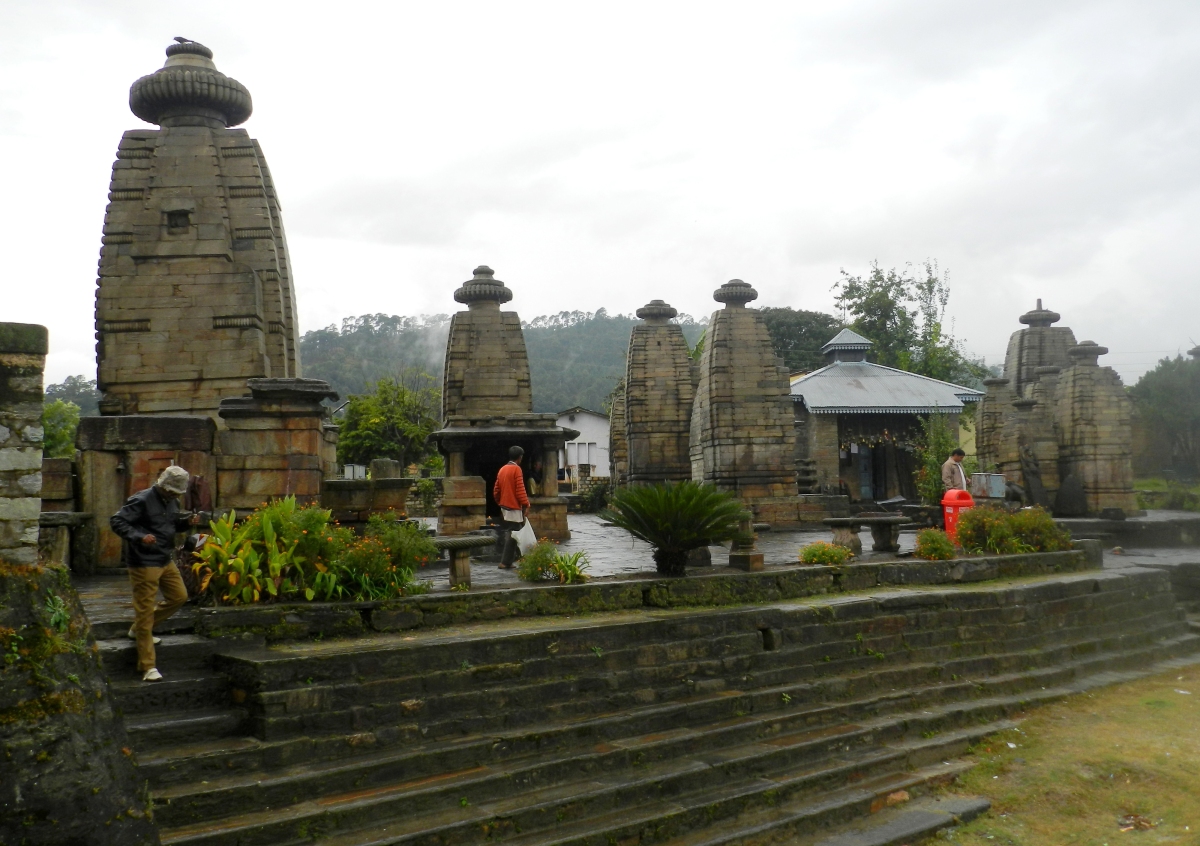
Baijnath Temple is a millennia old temple dedicated to Lord Shiva (Vaidyanath, hence the name Baijnath). It is now an archeological site. Built in 1204 A.D. this temple is one of the oldest continuously worshipped temples in the country.
Baijnath Temple
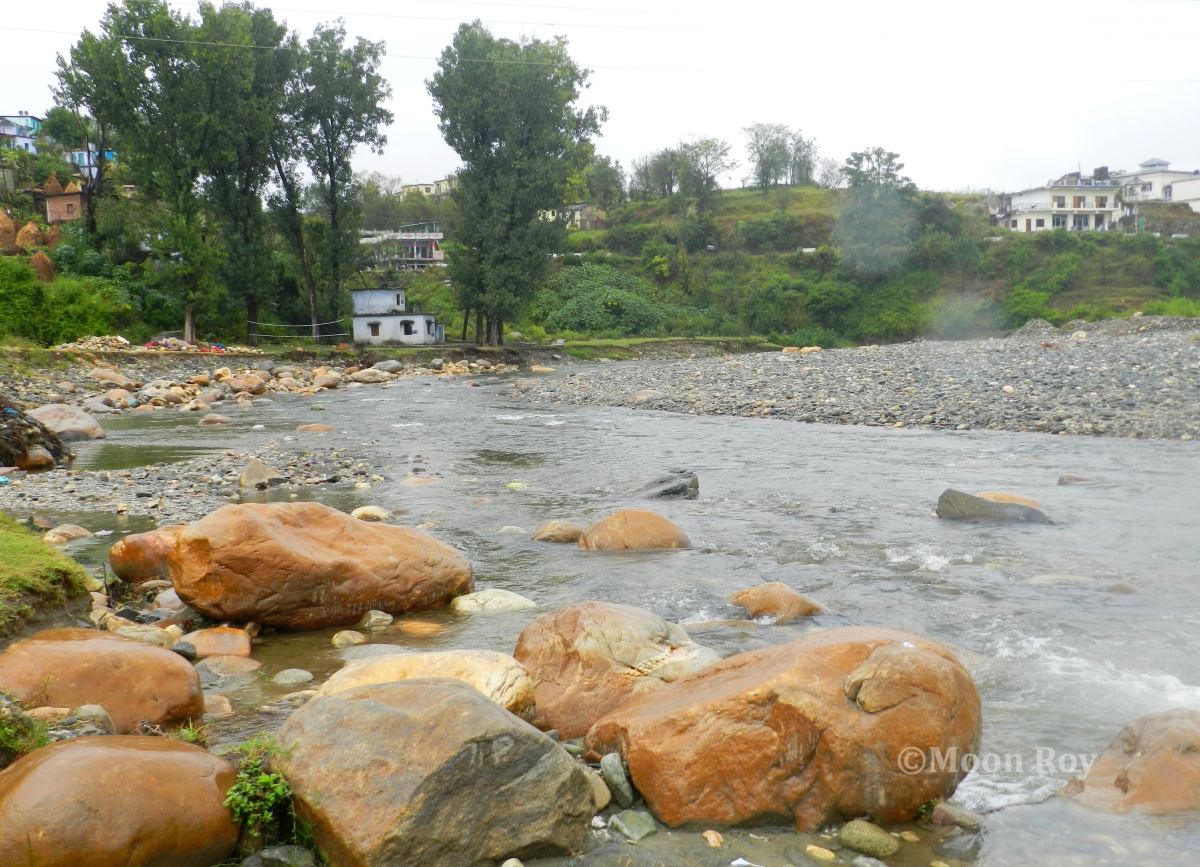
Still standing strong the temple is a silent witness of the River Gomati’s journey for over thousands of years.
Gomati River in front of Baijnath Temple
Coming back to where we started … we left Choukori for Almora at 9:30 in the morning.
I think the best thing about the journey from Choukori to Almora (Town) is that you can enjoy the view of snow-white Himalayas all along the way. Our route included Patal Bhubaneswar in Pithoragarh district of Uttarakhand. Patal Bhubaneswar is a natural wonder – an ancient limestone cave with numerous mythological stories hidden in its womb. Descending into the grotto through a narrow opening in the rocks is a thrilling experience which will soon turn into a pleasant surprise as you reach the chamber at the bottom. Camera isn’t allowed inside. And I am in no mood to describe what is inside the cavern. This is for you to discover because some things are better to be discovered than found. 🙂
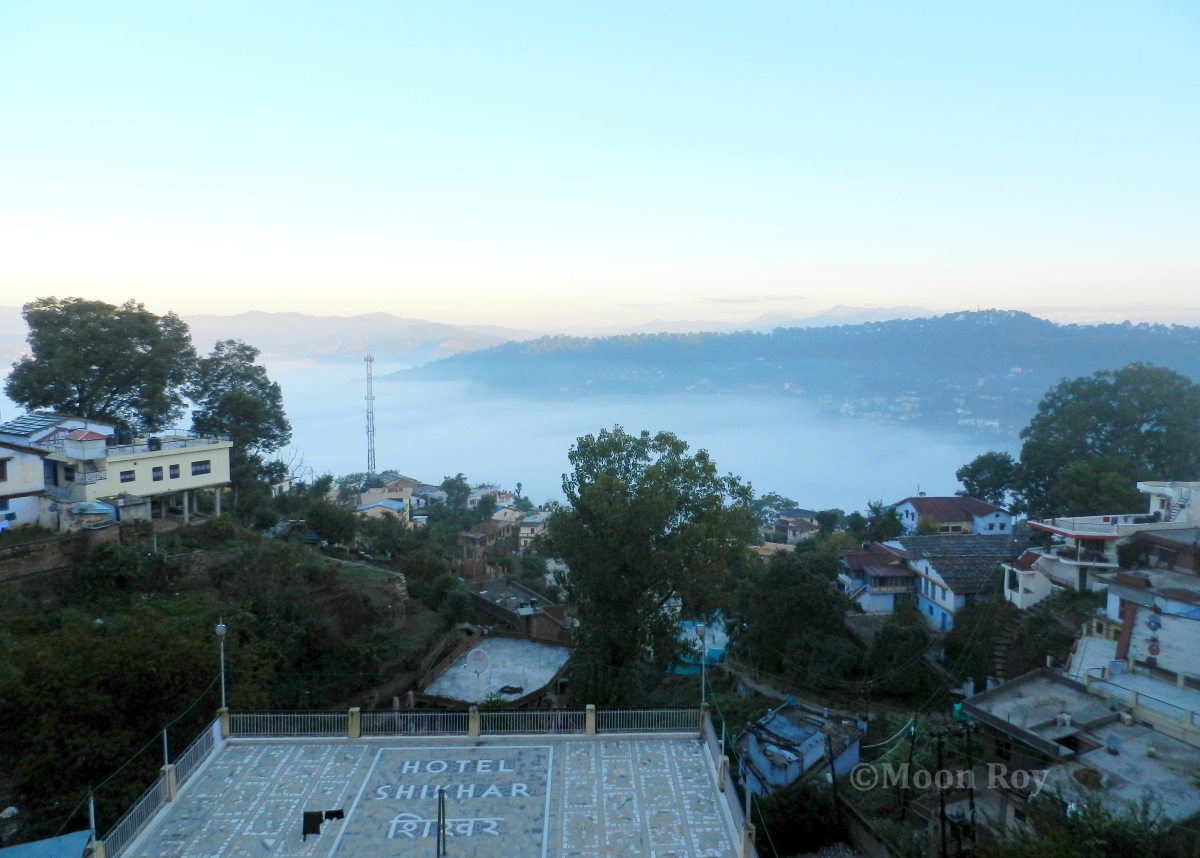
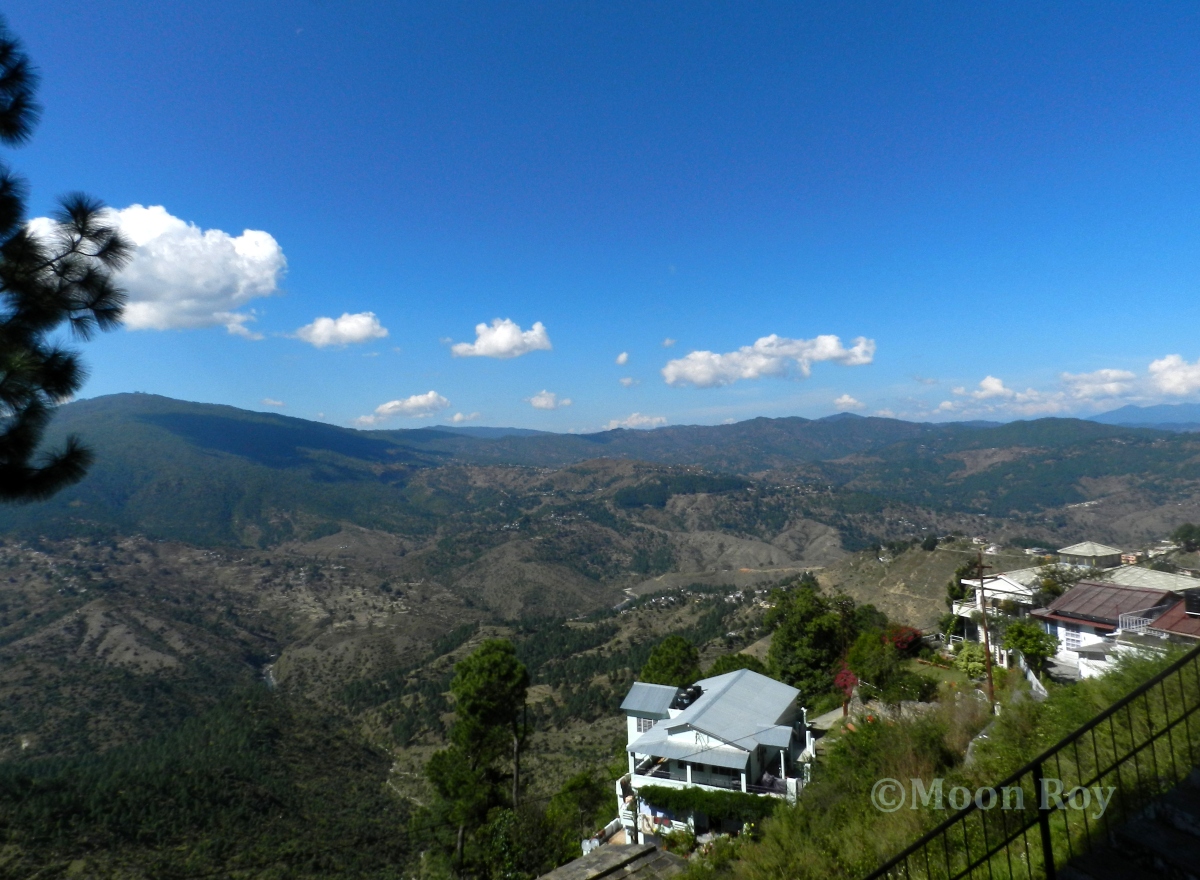
Hotel Shikhar was our immediate destination in Almora. Our stay in this moderate budget hotel was really enjoyable. Its strategic location allows easy access to the bustling town center and market. You can also spend hours sitting on the terrace watching at the Himalayas and soak in the scenic beauty of Kumaon hills.
View from the hotel’s terrace in Almora
The next morning was scheduled for Almora sightseeing.
Our first stop was Ramkrishna Kutir, a small monastery operated by the Belur Math. The monastery, nestled in the lap of the mountain, offers a peaceful resort for prayer and meditation for everyone in search of peace and salvation.
the mountain offers a peaceful resort for prayer and meditation
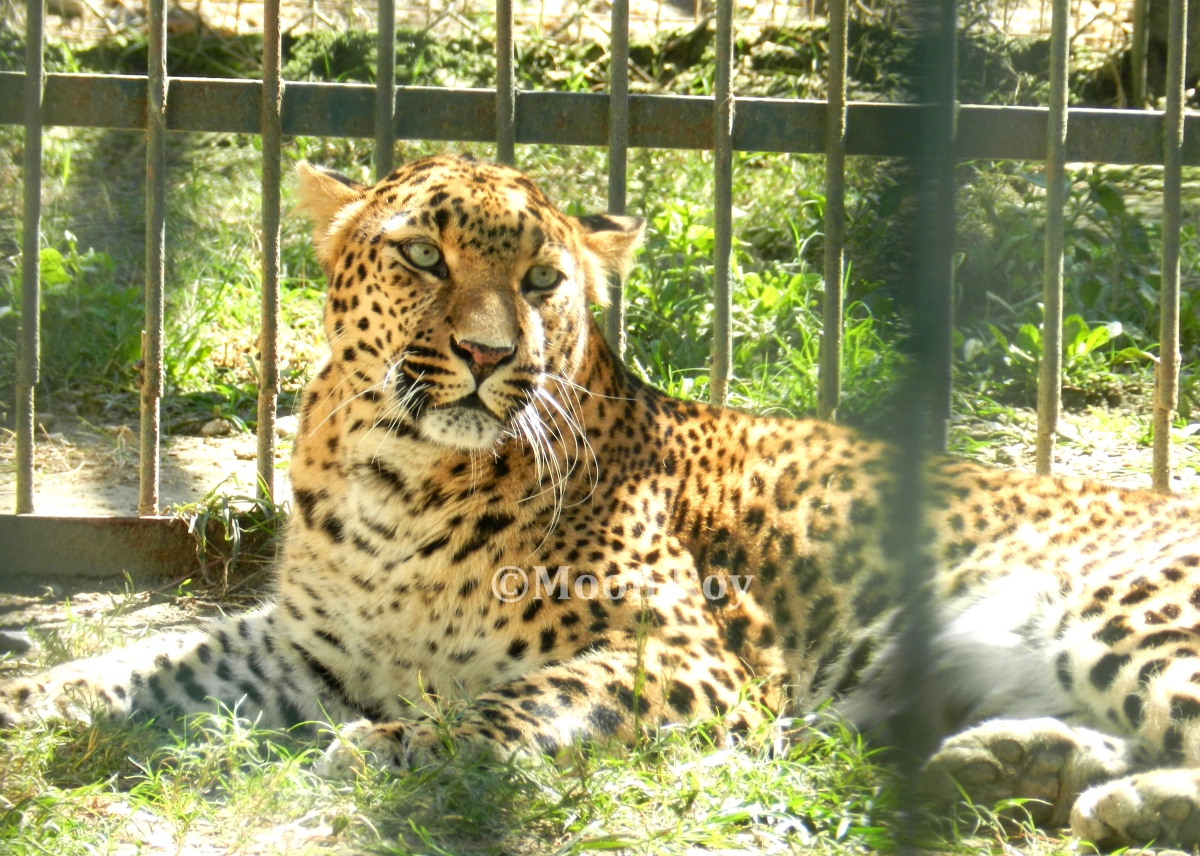
The star attraction of Almora Zoo is definitely leopards. These leopards are found in the jungles of Kumaon Himalayas and they are the protagonist of the book Man-Eaters of Kumaon by the famous naturalist-hunter Edward James Corbett, popularly known as Jim Corbett in Northern India.
A female leopard at the zoo
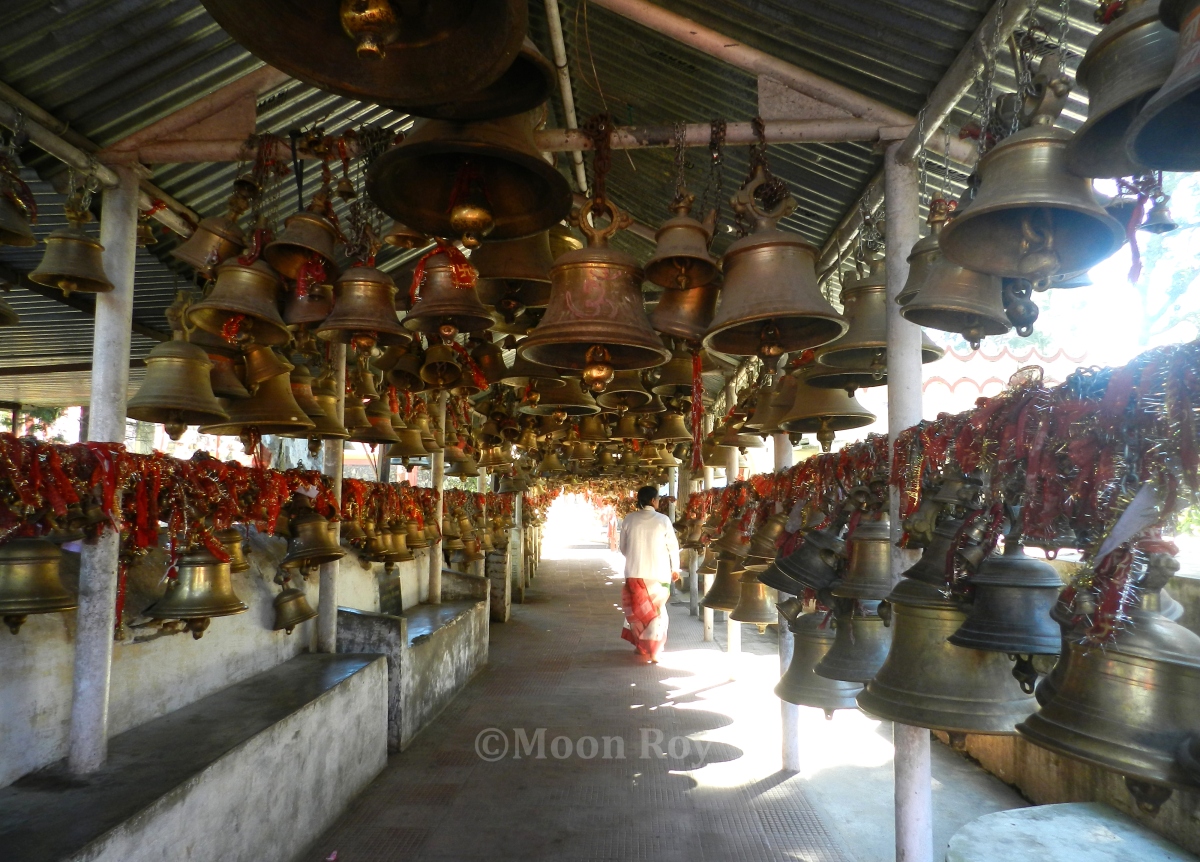
Our next destination was Golu Devata ka Mandir – the temple of Lord Golu, a deity seen as an incarnation of Lord Shiva and is widely worshipped in the villages of Kumaon. It was a small but beautiful temple boasting hundreds of thousands of wishing bells. They say if you write down your wishes on a paper and tie it with a bell in this temple your wish will come true. The existence of uncountable bells and letters is perhaps the proof if it! 🙂
the temple having millions of wishing bells
However, here are a few more glimpses of Almora’s scenic beauty for your eyes only 😉
Soak in the beauty of the HimalayasAlmora Town
After completing our sightseeing in Almora we returned to the hotel. We had to pack our bags for the next leg of our trip which was from Almora to Lucknow by 13020 Bagh Express which departs from Kathgodam at 9:55 at night.
Twenty years back, we were travelling to Puri by train. It was an overnight journey from Kolkata to Puri. The sun was already up in the sky when our train crossed Odisha border. I was looking outside sitting by the window with my father by my side. There were row of trees and wide-open paddy fields on both side of rail track. Suddenly, I saw some men (local villagers) sitting on their heels along the slopes by the rail track. It didn’t take me, a mere schoolgirl, much time to understand what was going on. I was completely shocked at the sight. How can they do this in the open? It automatically came out of my mouth, “Baba, ora ekhane ki korchhe?” (What are they doing here, daddy?). My father replied, “Don’t look there.” … and he shut the window. That was the first time I saw people defecating in open. However, the joy of seeing the sea was more than enough to override the bad feeling in my tender mind.
60% of people practicing open defecation in the world lives in India … a shocking fact
A few months earlier, reading the news that “60% of people defecating in the open in world live in India” triggered a flashback. According to a joint monitoring report by World Health Organization (WHO) and UNICEF a total of 626 million people in India practise open defecation. It is so unfortunate that the picture, I saw as a child, has not changed in 20 long years. Perhaps the government also reacted the same way my father did 20 years back. When you have a serious problem and you don’t know where or how to start to solve it pretending not to see it is the ‘best’ way to get rid of it.
It is even more shocking that women in the villages are bound to practice open defecation due to lack of toilets in the household. In a country like India where woman’s dignity is most important in the family… where married women don’t even have permission to take off their veils in front of other men – how this kind of act, which is disgraceful for a civilized society, can be practiced even in 21st century? The thought surprises me. Such paradox can only exist in India!
Open defecation is a deep-rooted social problem in India
Open defecation in rural areas is a deep-rooted social problem in India. Government report says ‘poverty’ is the reason behind it. But I doubt is it poverty all the time? Not lack of education? Not lack of infrastructure? When our Bunty (the name symbolizes young boys in the villages) doesn’t get the basic sanitation and health facilities who is going to think about Babli (representing all your girls in rural India)? After all, women are still treated as second-class citizen in many parts of the country.
I can relate to Babli’s problem and it’s my duty to speak for her
Recently, I had the opportunity to travel to Rajasthan and Uttarakhand. During hours of long drive from one city to another answering to Nature’s Call was like an ordeal. A proper toilet is rare to see by the roads. We had to wait until we found a restaurant where we could expect at least a toilet, even if it was not well maintained. But there were times when we had to surrender to natural instinct. That’s when I realized how dangerous ‘open-defecation’ could be, leave alone the matter of shame and indignity for a woman. I experienced this only twice or thrice in my life. When I think of Babli, rather millions of Bablis in India going through this woe on a daily basis it disturbs me deeply.
When I came to know about #ToiletforBabli campaign via IndiBlogger Happy Hour I instantly decided to write a post addressing the issue. I believe as an educated citizen of the country and being a woman I can do this much for Babli.
Why we badly need private and safe toilet for Babli
Most of time women seek deserted places or bushes for privacy which may turn out to be fatal for them. The dangers of open defecation for Babli and other children are many.
She can die from snakebite
She can develop urinary infection which is contagious
She can develop deadly diseases such as diarrhea, intestinal worm infections, typhoid and cholera (Every year more than 200,000 children die from diarrhea – source: Forbes India Blog)
She can be molested, raped and even killed due to lack of personal safety (We all read about Badaun rape case recently. In addition, BBC report says – “according to police and social activists most of the cases of rape of women and girls in states like Bihar occur when they go out to defecate in the open…”)
Reasons behind open defecation
If we delve deeper we will see that the reason behind lack of sanitation and private toilet at village households is not always due to poverty.
#1Scarcity of water in remote areas – When you don’t have sufficient water supply at home will you not avoid making a latrine inside the house?
#2Religious beliefs – I have heard from my mother that in her ancestral home the latrine was at least 15-20 yards away from the main residence. Why? They worshipped their ‘Kula Devta’ (ancestral god) in the house; hence “dirty” things like toilets were built away from the house.
#3Lack of education – The last but most important of all is ignorance – absence of education and awareness. It’s not that the entire rural India lives in poverty. Yet according to UN report 626 million people in India miss sanitation and hygiene. Why? Nearly 50% of Indian population lacks education. Unless you are taught about hygiene (as we were in schools) how those who have practiced open defecation for ages, will suddenly realize the need for sanitation and private toilet?
Education and awareness is the key
Education and health awareness programmes are a priority if we want to save Babli from this misery. Though this is the duty of our government they, unfortunately, took so long to wake up. There are instances of successful sanitization campaigns such as Nandigram II block, West Bengal; Nirmal Gram, Gujarat and ‘Balmiki’ in Maharashtra. Well… better late than never! At least, Modi Ji has the courage to say “toilets before temples”, which no other PM have shown in recent times. So we can expect more activities from the administration.
#ToiletforBabli – a campaign to make India open defecation free
Currently, with over half a billion people defecating out in the open every day the situation is darn grave in India. It may not be possible for the government to handle the crisis alone. There lies the need for private initiatives to make India open defecation free. And Hindustan Uni Lever’s (HUL) sanitization brand Domex is doing this job successfully for a year now with its Domex Toilet Academy (DTA) programme. The objective of the programme is to make private toilet accessible in the villages and spread awareness about the benefits of sanitary toilet in the household.
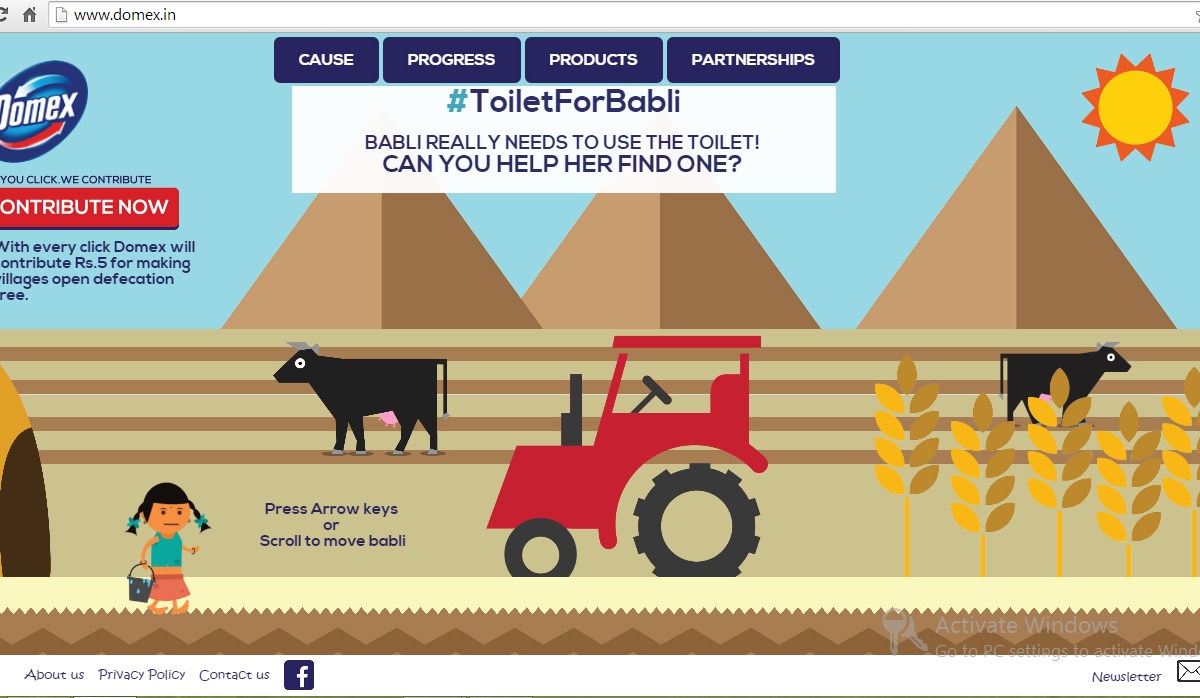
#ToiletforBabli – Click for Cleaner and Safer India
Domex #ToiletforBabli is a unique online campaign (launched as part of DTA programme) through which you can also take part and show your support in this initiative. Visit www.domexforsanitation.com and click the button “Contribute Now”. For every single click Domex will contribute 5 rupees to Domex Toilet Academy fund for eradication of open defecation in India.
So, it’s just a matter of a single mouse-click. I have done my part. Now it is your turn to help Babli get a healthy lifestyle and live with dignity. You can also share the page in your network and invite your friends to take part in this endeavour.
Let’s join hands together for a cleaner, healthier and safer India.
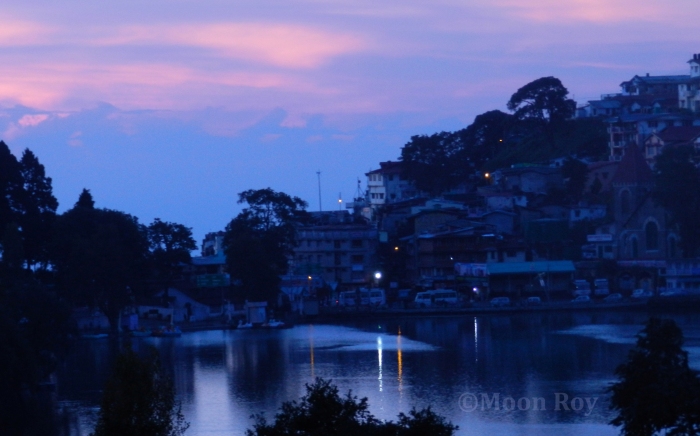
Finally, the day came… we were about to leave Nainital for Kausani. I woke up very early, at 5:30 that morning. Put on my hoodie and got out of the hotel room to take a look at the lake, and the promenade, and the buildings all around for one last time. The sky was still dark; the lake was still plunged into darkness; the streetlights were still on and some fitness freaks were seen jogging up and down the Mall Road.
The lake was still plunged into darkness
Suddenly, the temple bell (Naina Devi Temple) started ringing – ting-ling-ting-ling – piercing the silence of the dawn. That moment, standing alone on the balcony, I felt a pang in my heart. The pang of separation from my beloved Nainital.
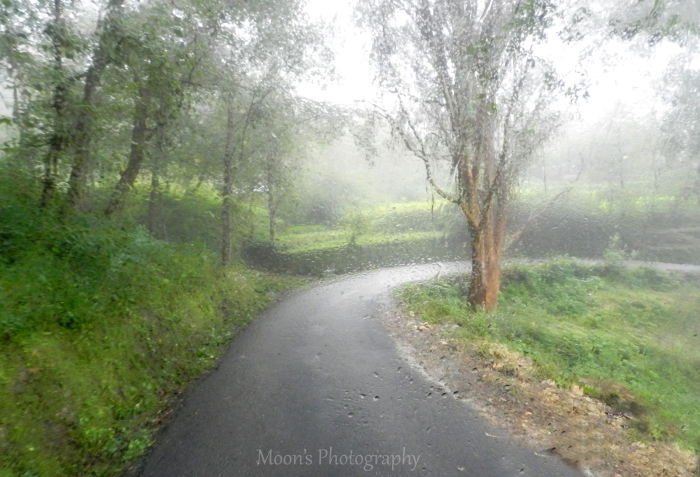
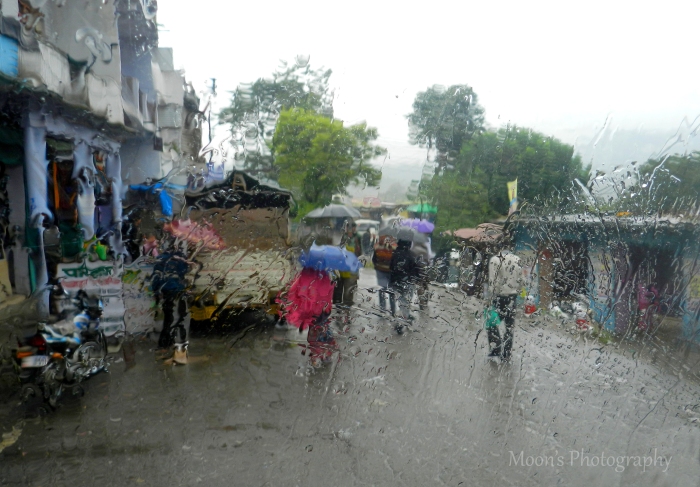
We started for Kausani at around 8:30 that morning. The sky was dull and gloomy and the drizzle started. It seemed that Nature reflected my mood at that moment! As we proceeded with our journey the drizzle continued giving a hint of the inevitable downpour later. After two sunny days in Nainital the rain was a sheer disappointment. A thin layer of fog limited our vision. We sat inside the bus with all windows tightly shut, and cursed the unexpected rain silently.
I was vaguely looking at the rain-washed road and trees along the slopes of the hills when I suddenly realized that the view outside was quite interesting. It was different but beautiful. This realization wiped away all the bitterness and filled my mind with joy and hope, once again. “Nature never did betray The heart that loved her”… She always compensates one way or the other.
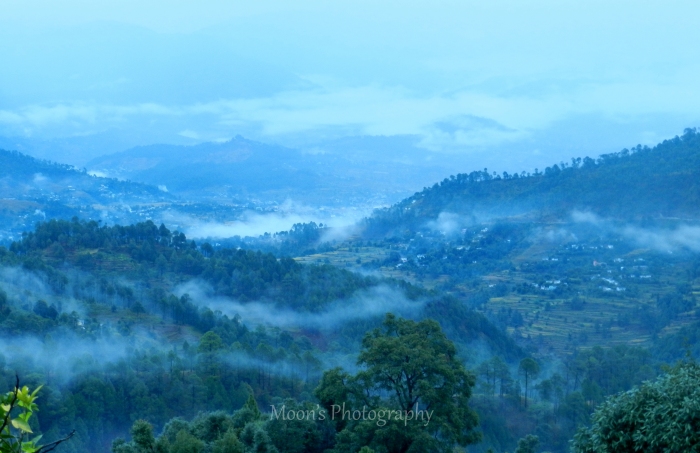
I caught a few glimpses of the hills and towns bathed in late monsoon rain.
“Nature never did betray The heart that loved her”Colors of monsoon at Ranikhet, Almora
On our way to Kausani via Ranikhet our first stop was Kalika Mandir, an old temple nestled on top of the hill overlooking the green slopes. Then we halted at Ranikhet Golf Course in the Army Cantonment area and spent some time there. Rain could no longer spoil my spirit neither the excitement of stepping on a golf ground for the first time in my life.
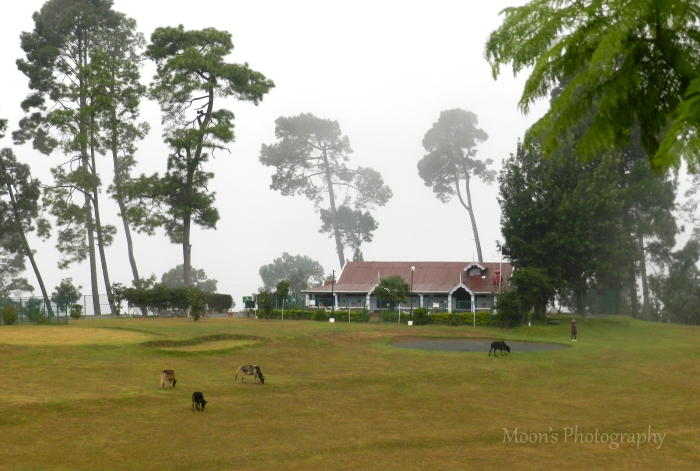
Unfortunately, I didn’t see any golfer on the ground. After all it’s raining out there…who’s gonna come out for a practice!… But as I looked around I found them grazing at their own pace. 🙂
No golfers on a rainy day, only cattle grazing on the fields…
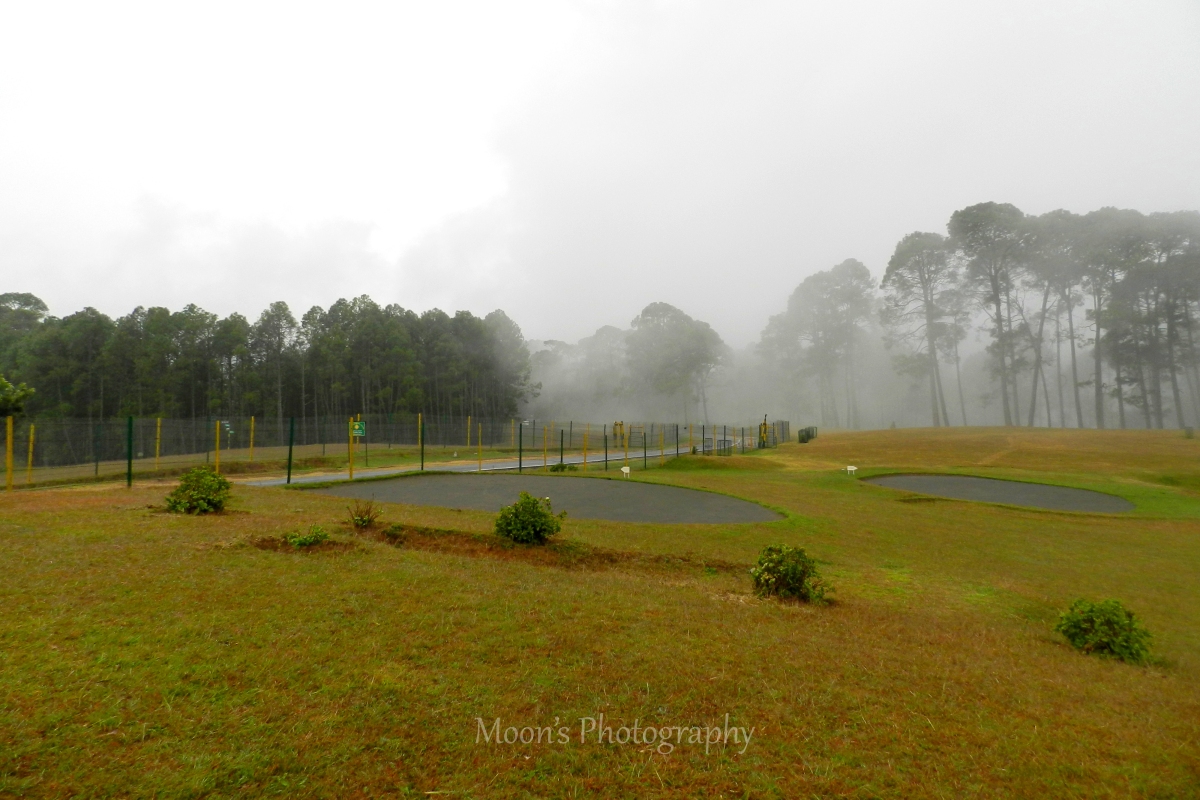
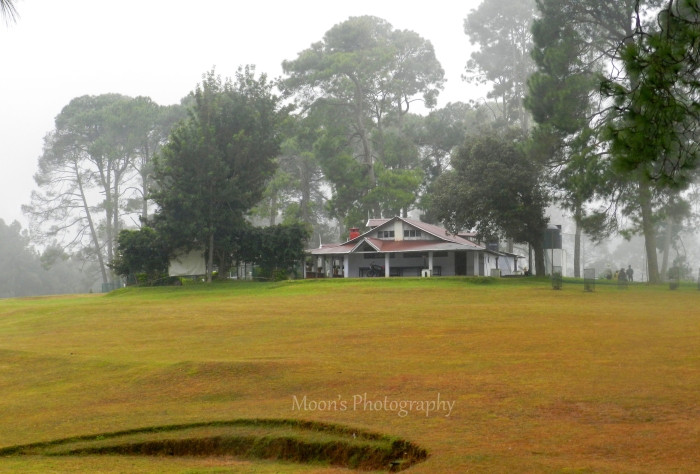
The Army Golf Course at Ranikhet is a wide-open space soaked in quietness. I think the combination of rain and fog made the atmosphere even more dramatic.
Ranikhet Army Golf Course
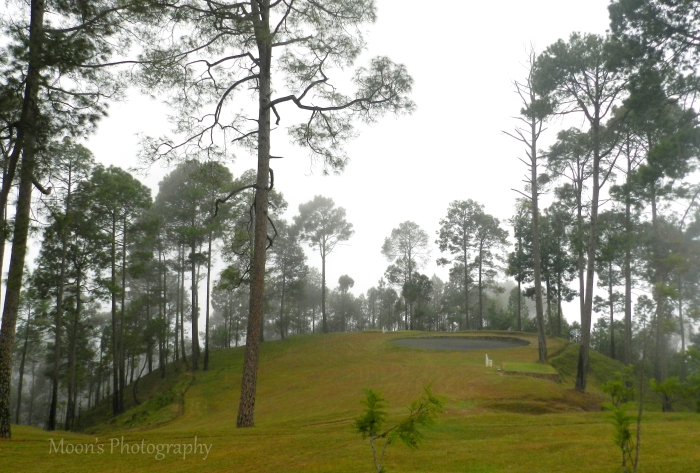
The sprawling green field with varying elevations and towering pines lining the boundary is altogether a treat to the eye.
The sprawling green field has varying elevations and towering pines lining the boundary
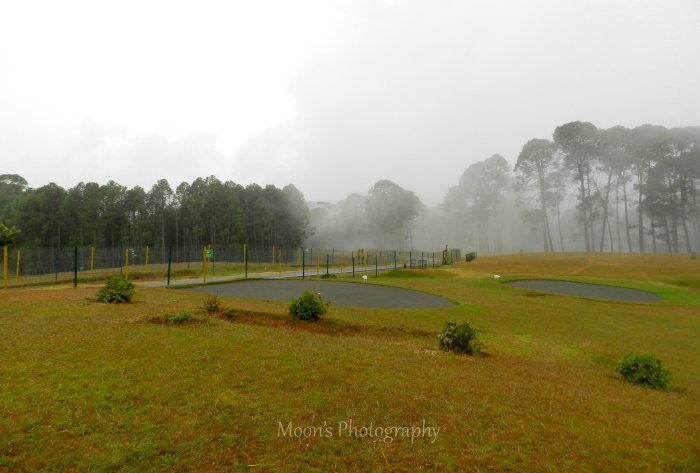
The pitch-black highway runs through the green field and finally disappears into the mist.
The highway runs through the green field and finally disappears into the mist.
I wanted to run like a kid but didn’t dare, as the ground had already turned slippery from continuous rain since morning.
After roaming around amidst the greenery of the golf course for nearly two hours we were back on the road. It was cold and my hands and feet got completely wet from the rain. What I badly needed at that moment was a cup of brewing coffee which I got only after reaching the hotel. Poor me…
I have been on the hills in monsoon when we made our trip to Namchi, Sikkim. So, I have seen it raining on the hills. But in Ranikhet and all the way to Kausani it was more pleasant an experience than it was in Namchi.
It was almost 5 pm when we reached our hotel in Kausani. I switched on the TV in my room while leisurely sipping my coffee. The news report said that this untimely downpour was the side effect of cyclone Hudhudthat left my favorite port city Vizag in utter destruction. My heart sank at the scenes of devastations that were showing on the news channel. My memories are still fresh with beautiful pictures of from our trip to Vizag back in 2010.
We stayed at Himalayan Mount View Resort in Kausani from where you can expect breathtaking views of snow-clad Panchchulipeaks of the Himalayas. Since it rained all night I gave up all hope of any scenic view next morning. When I got up at 6:30 next morning rain had stopped but there was no sign of the sun god. A veil of mist covered the hills and blotted out the peaks from our vision. As the morning grew older (it seemed) the mist got heavier and hovered down the slopes of the mountain offering an obscure view of the surrounding.
A veil of mist covered the mountains.
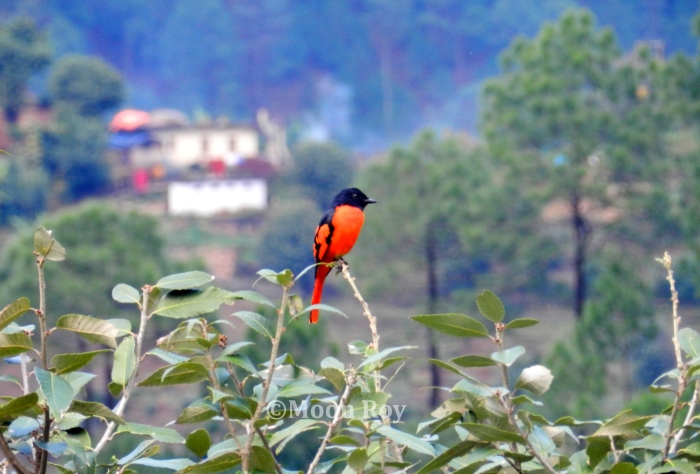
And that’s when I spotted this beautiful visitor who got herself perched on top of a tree and posed for me. 🙂
A beautiful bird perched on top of a tree and posed for me…
To those city dwellers who lead a busy life; spend most of their time in work sitting in front of a computer looking at the screen; feel stressed out at the end of the day; spend the weekend sleeping at home or unwinding in a bar or hanging out in a multiplex to re-energize themselves and prepare to take the Monday blues again.
(All the images are taken from internet.)
Travelling can rejuvenate our body and soul. The experiences that we gather through our journey enrich the mind. Yet in our fast-paced urban life we often seem to forget this simple truth. Or, do we give too much importance to our work and office?
Be it a long vacation or a short trip travelling can improve the quality of your life in many ways. As you take the journey you grow as a human being by developing different qualities and honing your existing skills.
While you travel you –
1. Set yourself free.
2. Embrace the unknown and the uncertain.
3. See new things.
4. See things differently.
5. Learn new things.
6. Discover new joys.
7. Taste new dishes and develop taste for different foods.
8. Add more fun to life.
9. Meet new people; make new friends (it also improves your communication skill).
10. Accept the differences.
11. Be bold. Dare to adventure.
12. Try new things – things that you’ve never thought of doing before.
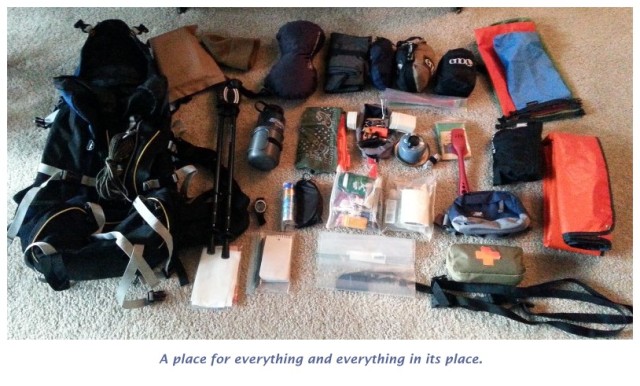
13. Be organized (to be in control).
14. Plan (the tour) and follow the plan.
15. Feel more confident.
16. Try to stay fit. You cannot afford to fall ill while traveling and to travel you need to keep fit.
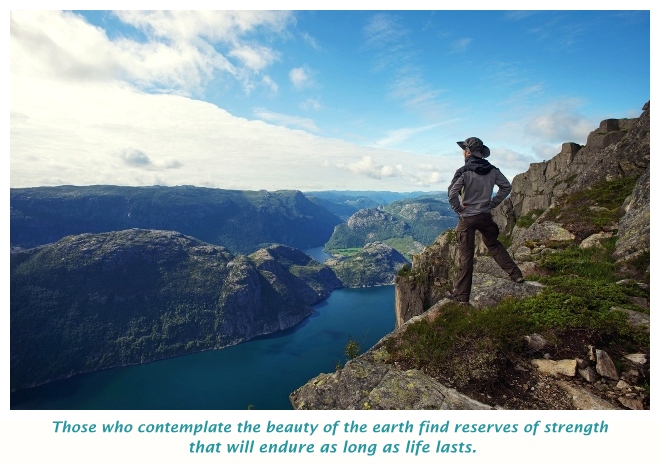
17. Contemplate and feel in harmony with Nature.
18. And finally, you begin to enjoy coming back home.
If you have not started yet, don’t worry – IT’S NEVER TOO LATE…
What are the other ways travelling can influence your lifestyle? Please feel free to share with us.
I always have a penchant for hill stations. The Himalayan Mountains with their magnificent snow-capped peaks and green pastures, standing tall in silence always attract me. So… when I got the proposal for a trip to Nainital I readily accepted it. The magical charm of lakes was bonus with the beauty of mountains. And now, when I am writing this post I feel happy about the decision I made in haste.
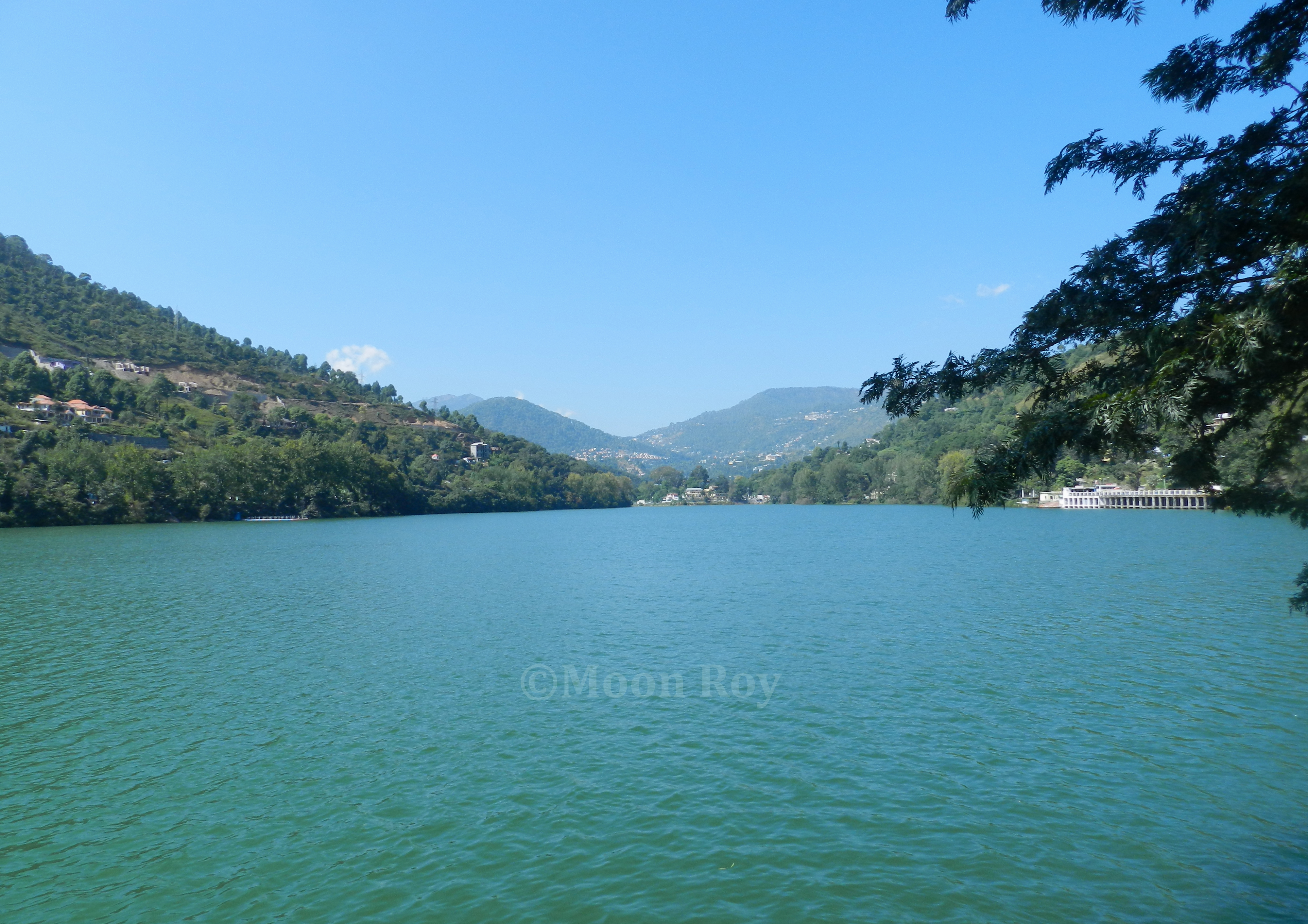
Nainital, the City of Lakes at the heart of Kumaon Himalayas in Uttarakhand is one of the most beautiful hill stations in India. The scenic landscapes dotted with emerald-green lakes surrounded by mountains and pleasant weather almost year-round attracts tourists from all across the country.
Nainital – the ‘Lake District’ of India
Nainital district, also popularly called as the ‘Lake District of India’, consists of several naturally created freshwater lakes and mountains. Tal means ‘lake’ in local language. They say there were more than 50 such lakes most of which now have disappeared. The effect of human civilization!
Sometimes the thought of ‘how fast we are losing our forests and natural resources’ dreads me.
Where to Stay
At the hotel in Nainital
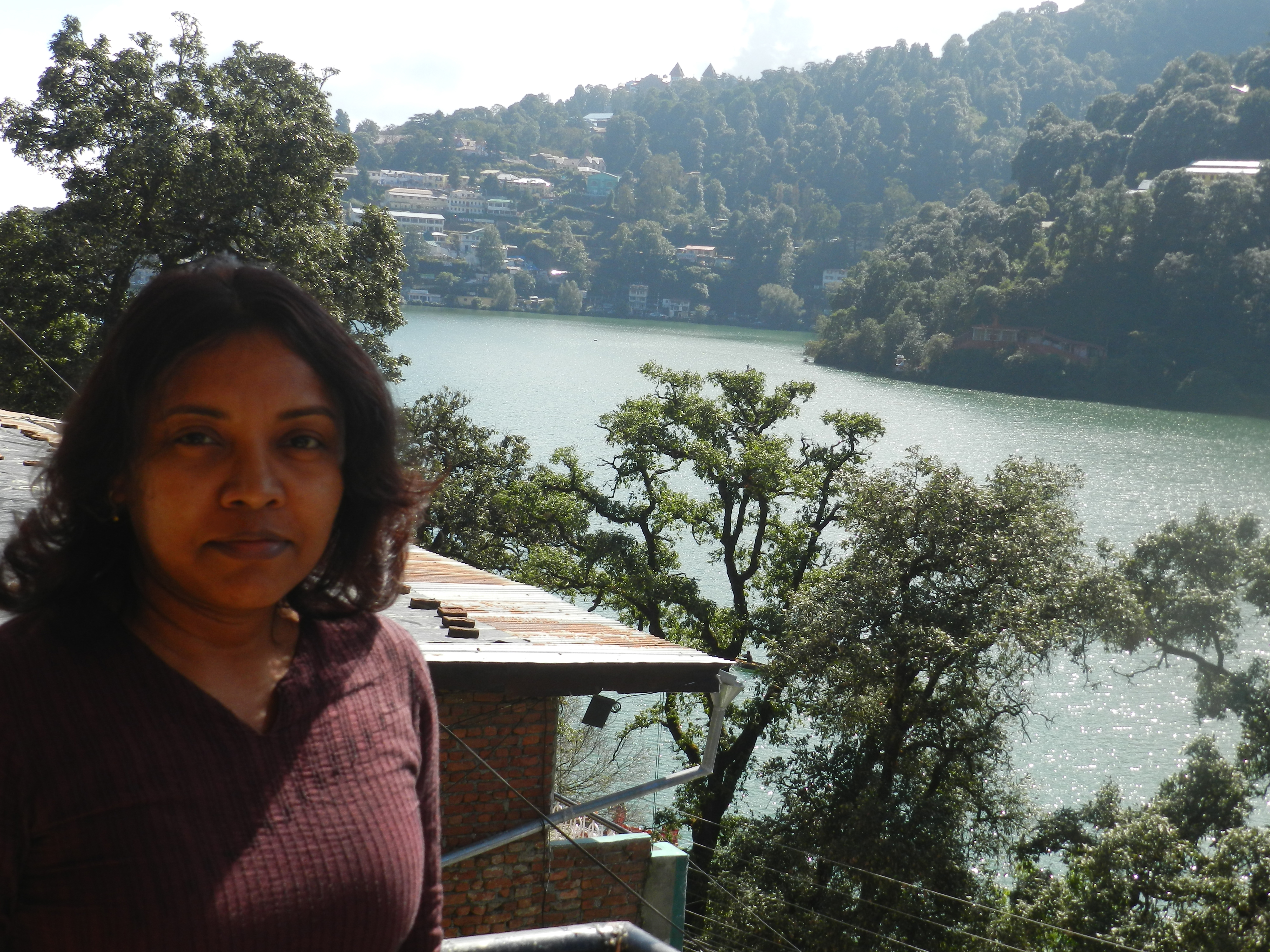
We stayed in Hotel Shalimar, a budget hotel with a strategic location ensuring quick access to the town’s mall as well as spacious rooms overlooking the Naini Lake. The boat pier was visible right from the hotel’s veranda.
But if you are looking for a luxurious accommodation there is Grand Hotel on the Mall Road to offer you magnificent view along with high-quality service. . However, these are examples only. Hotels are aplenty in Nainital.
We reached the hotel at around 1 pm and took a much-needed shower and had lunch. After that we set out to explore the town.
Things to do
In my opinion there are five must-dos in Nainital District which are –
#1 Boating
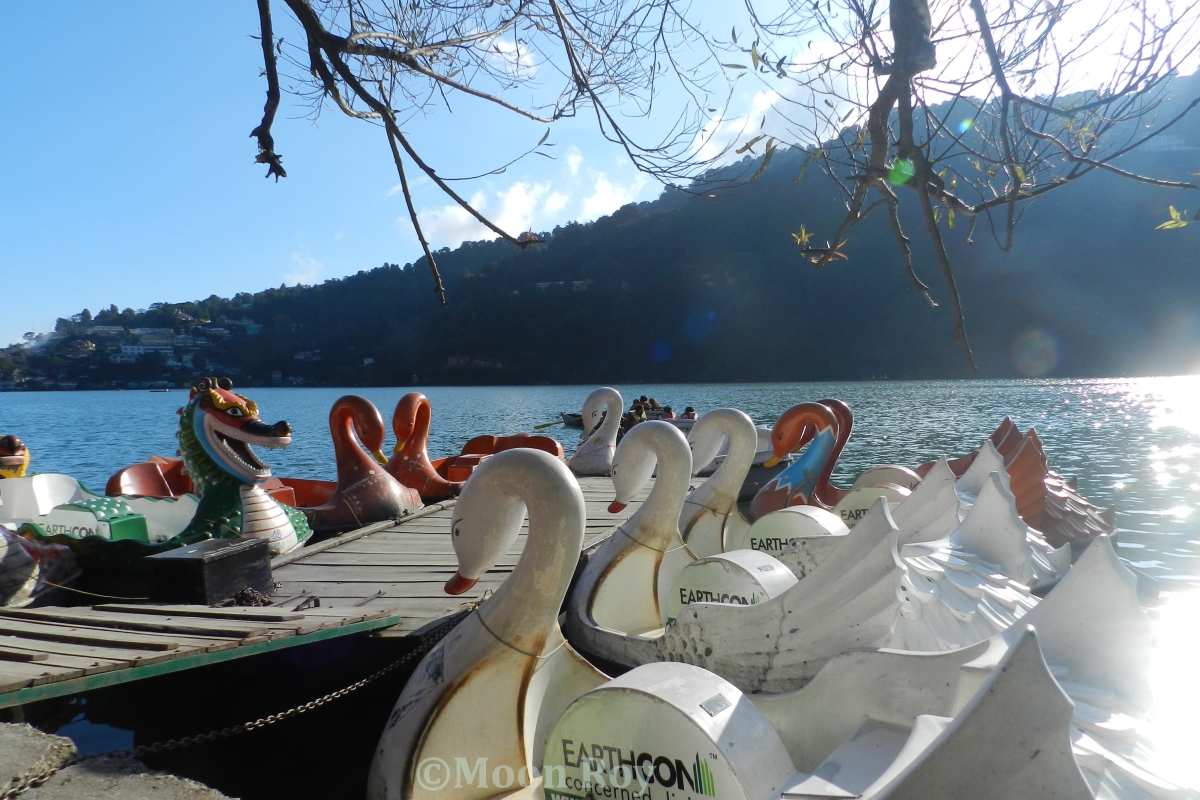
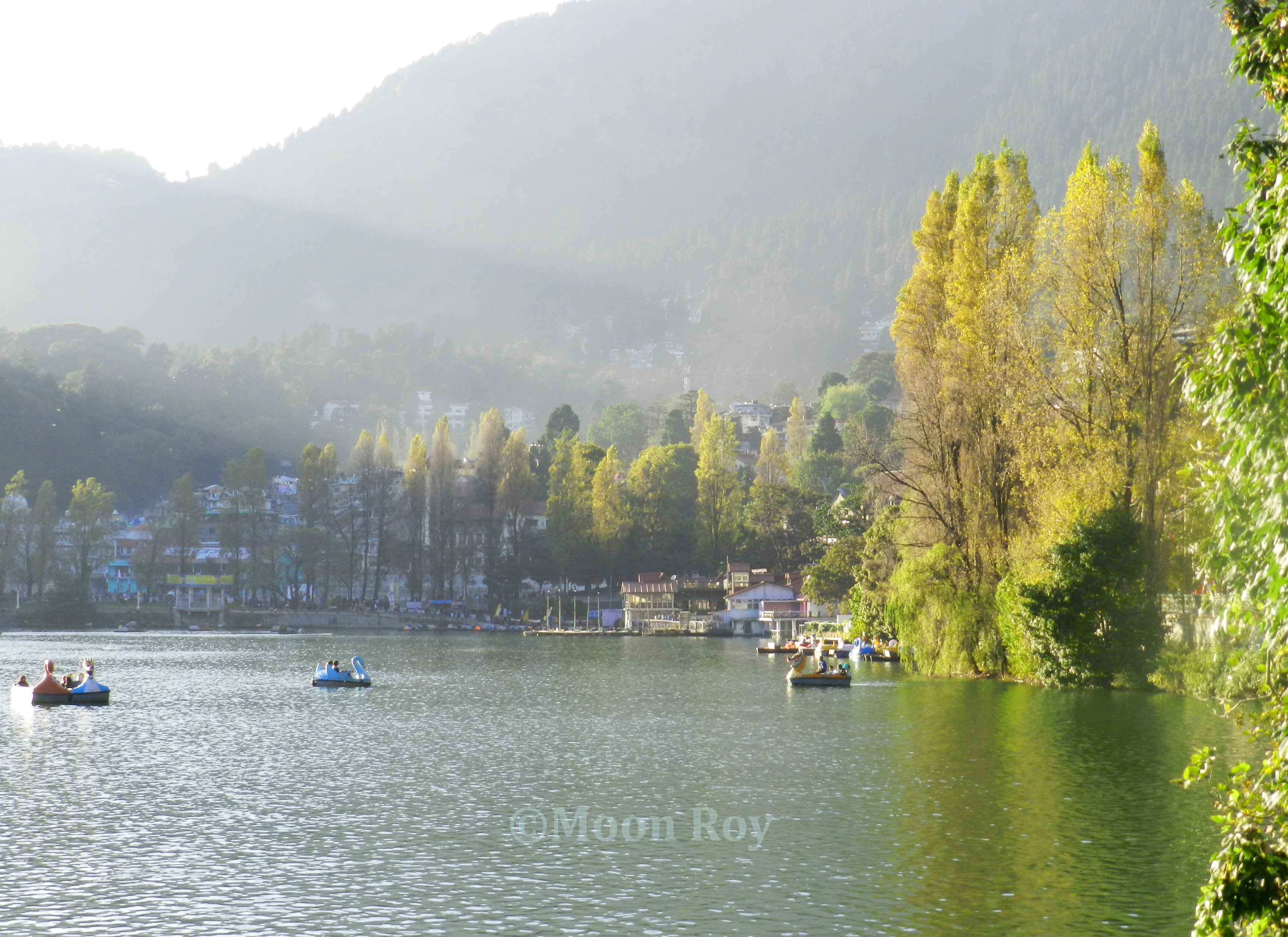
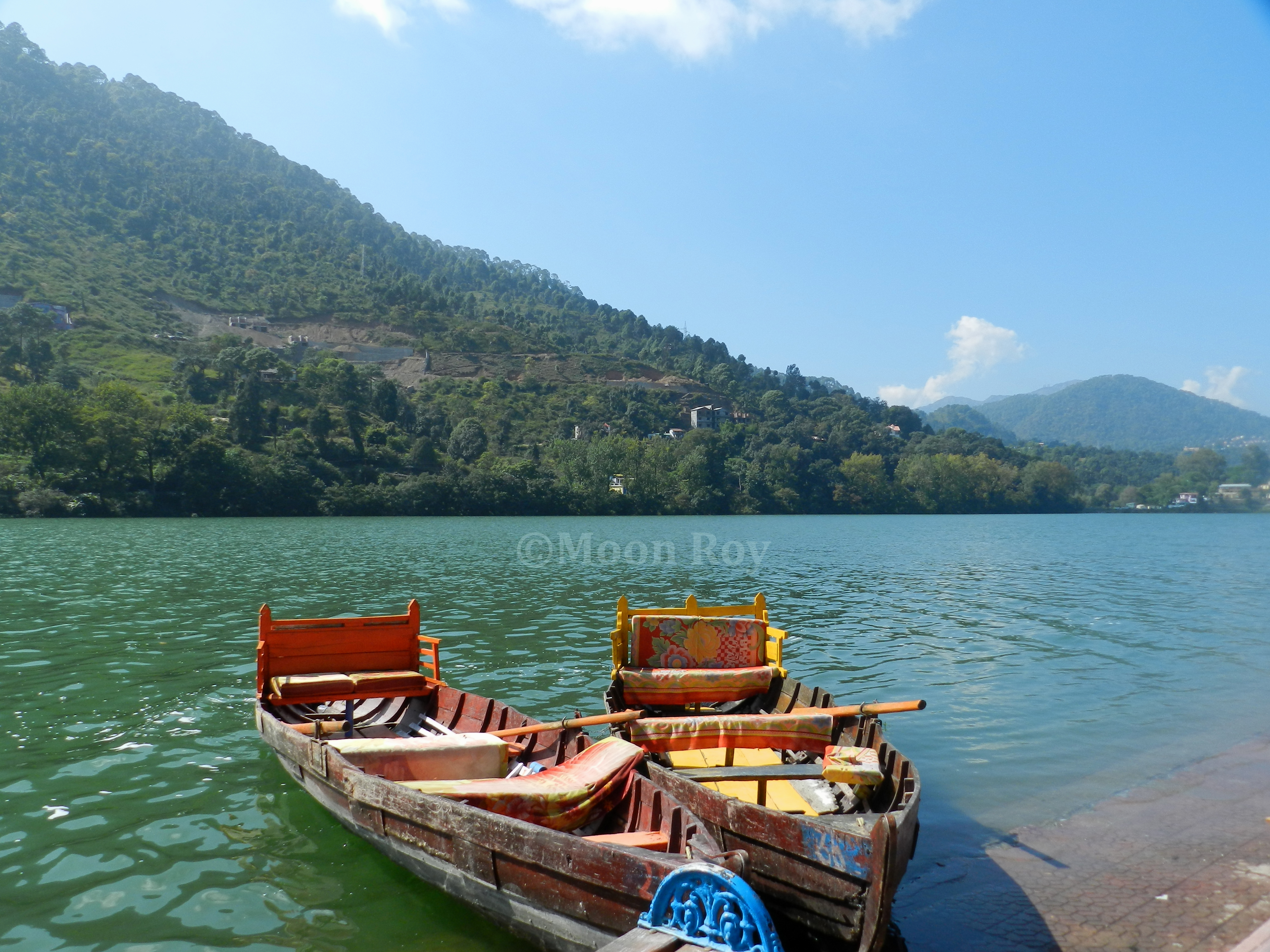
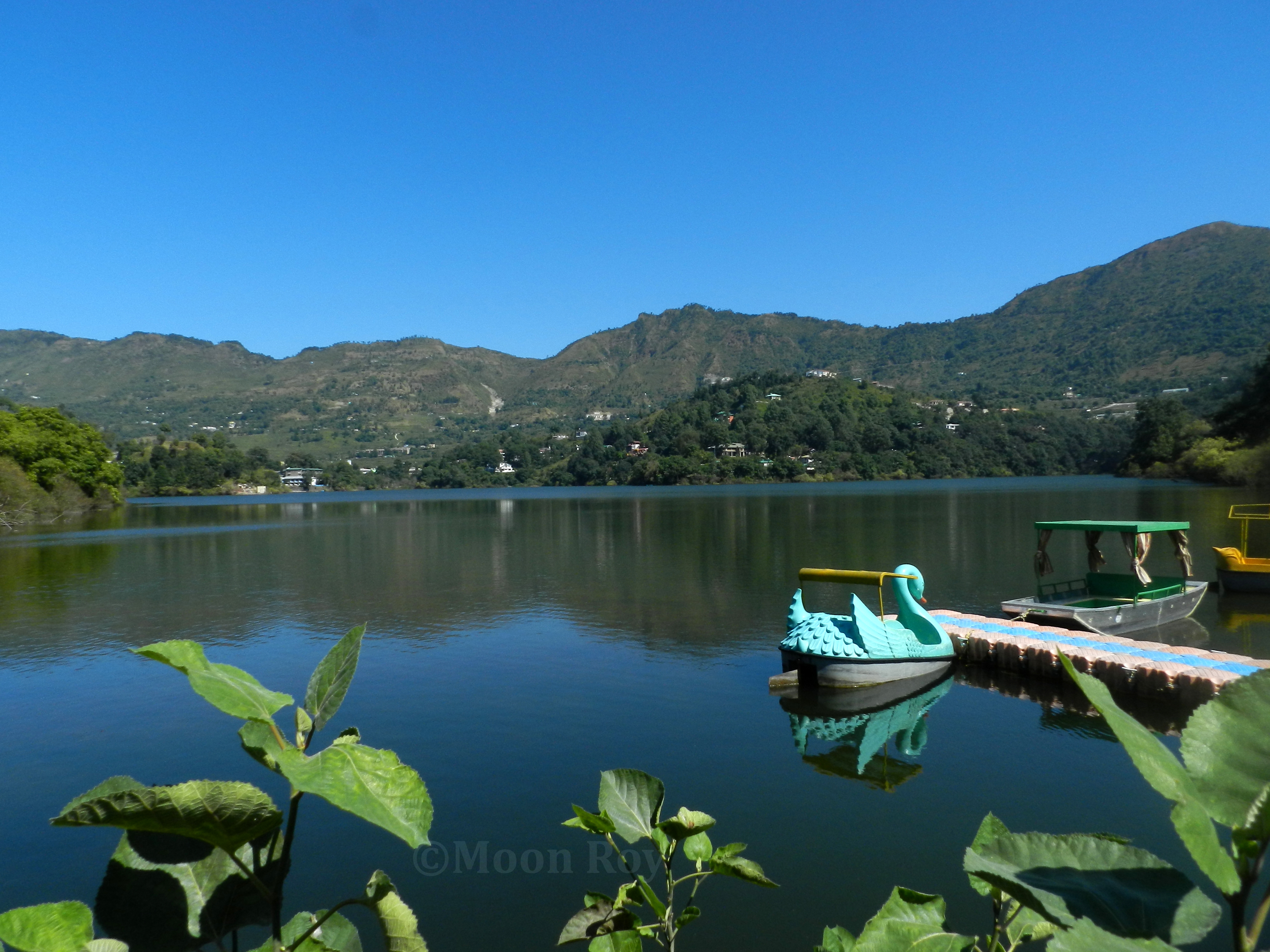
You will find two types of boats in Nainital for recreational purposes – paddleboats and rowing boats. The view of white swan-shaped paddleboats lining up the wharf at Naini Lake was simply inviting.
The boat pier at Naini Lake
However, we finally went for a rowing boat since it can accommodate up to four people at a time excluding the boatman. Charge is Rs 210 per boat for a 30-minute ride. As we were enjoying the ride on the pristine water I looked at the promenade along the lake. It was lined with maple trees. There yellowing leaves were looking fiery in golden streaks of afternoon sun.
A boat ride in the lake and soak in the beauty of the place
On my asking the boatman said that the depth of the lake in 128 feet which, I thought, is formidable! Fishing is allowed but you need special permission from the concerned authority. As we returned to the dock a wonderful sight caught my attention. A gaggle of geese gathered along the bank where some tourists were standing and throwing foods at them. It seemed like the ducks were asking – Hey! What do you have for us? 🙂
A gaggle of geese at Naini Lake
#2 Ropeway
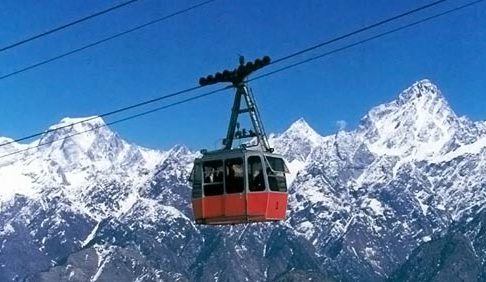
From my experience I think this is the first and foremost thing to do when you are in Nainital town. The ropeway or the cable car takes you to the Snow-View Point situated at a height 2270 meter from where you’ll not only get a panoramic view of Naini Lake but also a breathtaking view of the snow-capped peaks far away. One ride (to and from) costs Rs 150 per head for adults and Rs 100 for kids.
Ropeway at Nainital – Image: journeymart.com
The board on the counter says the timing to buy tickets is from 10 a.m. to 4:30 p.m. But when we reached there by 4 p.m. the counter was already closed. The ropeway is operated by the government. As we inquired we were told that there is a quota for daily tickets. As soon as the quota for the day is full the authority closes the booking counter. Unfortunately, that was the thing happened with us. We had to return disappointed because we did not have the time to go back the next day.
#3 Sightseeing
Sightseeing in Nainital mainly includes visits to Bhimtal, Sattal, Naukuchia Tal, Nainital Zoo, Waterfall, Sunset point and Khurpatal.
Bhimtal is situated at a lower altitude than Naini Lake. The aqua blue water beckons onlooker to have a boat ride or at least spend some time by the waterfront. Fish lovers may like to see the aquarium situated in the middle of the lake. Although the tickets for boating and aquarium are separate you have to collect them together from the waterfront office in case you wish to find out what’s in store at the aquarium.
Lake Bhimtal
It was a bright sunny day and we thoroughly enjoyed boating under the sun. The smell of fresh water brought by the cool breeze rejuvenated my soul. It was the serenity of the place that I liked the most.
Sattal Lake
Sattal is a combination of three lakes joined together naturally. Apart from boating facility there is one more attraction. It offers a 15-minute trek to the church on top of the hill on the other side of the lake.
I enjoyed trekking along the narrow, steep walking trail with giant pines and other coniferous trees creating a canopy over my head. The trail ends in front of a Church. I sat down in front of the closed door of the church and tried to feel the silence and sanctity of the place amidst the constant chirping of crickets.
The trek ends in front of the church by the lake Sattal
The lake Naukuchia tal is comparatively smaller than the previous two and to me the most beautiful one. The place was much quieter than the other two spots…probably because of lack of crowd. The boat wharf here is built with floating buoys. I stood at the end of the ramp facing the lake and felt like I was floating away – it was amazing! 🙂
Naukuchia tal
On our way back we halted at the temple of Hanuman ji – Hanumangarhi Temple. The huge statue of the ape god standing like the guardian of the hills inspires awe and admiration.
Hanumangarhi Temple
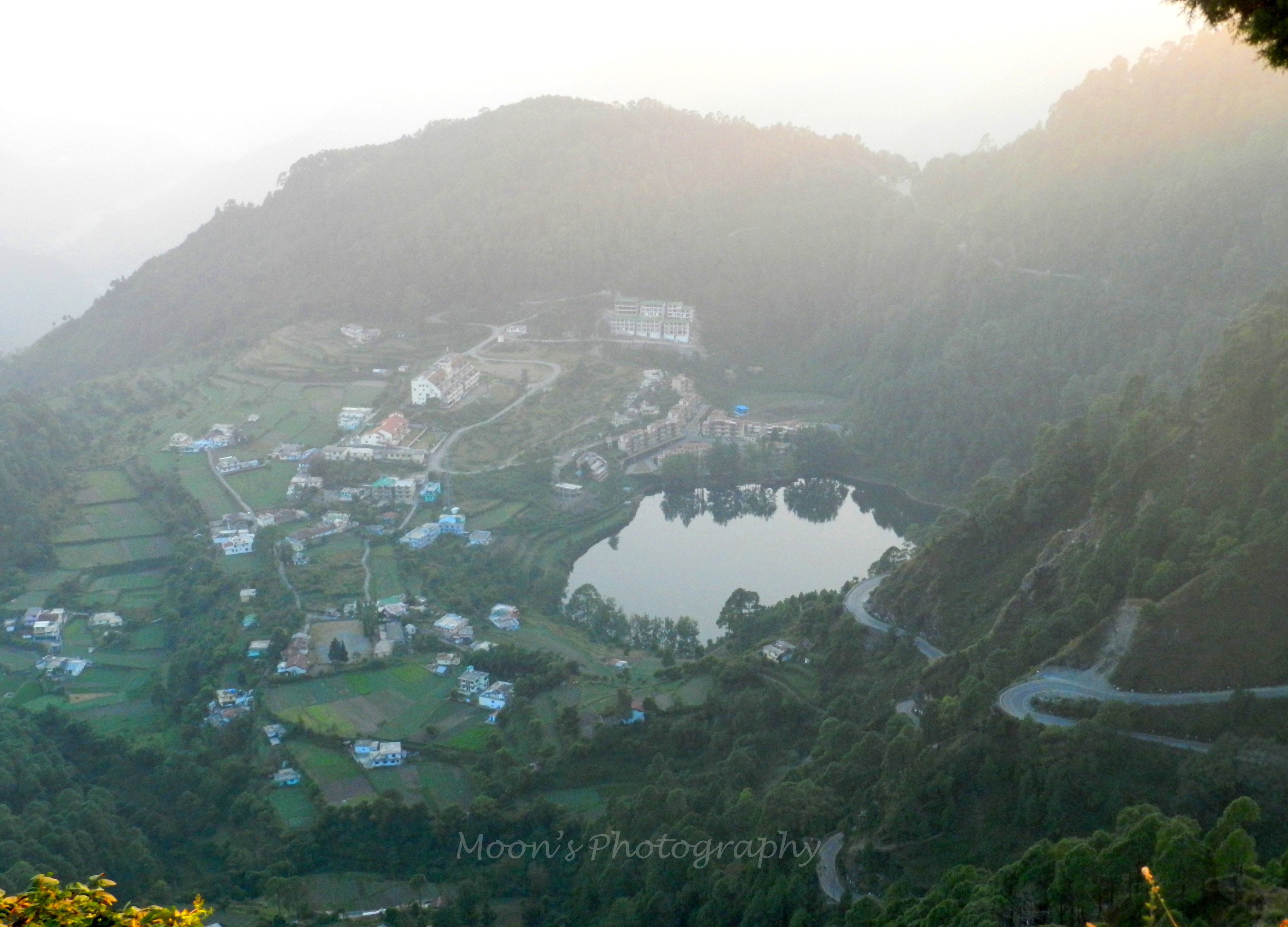
Your Nainital sightseeing is not complete if you don’t visit the Waterfall; take a bird’s eye view of Khurpatal and watch the sunset from the sunset point there. We rented a small car for Rs 500 that will take us to the waterfall and return to the mall from where we started. The waterfall is about 15-20 minutes drive from the town center. It was nice sitting by the waterfall under the towering pines and listen to the sound of rippling stream.
On our way back we were to see Khurpatal and sunset point.
Khurpatal
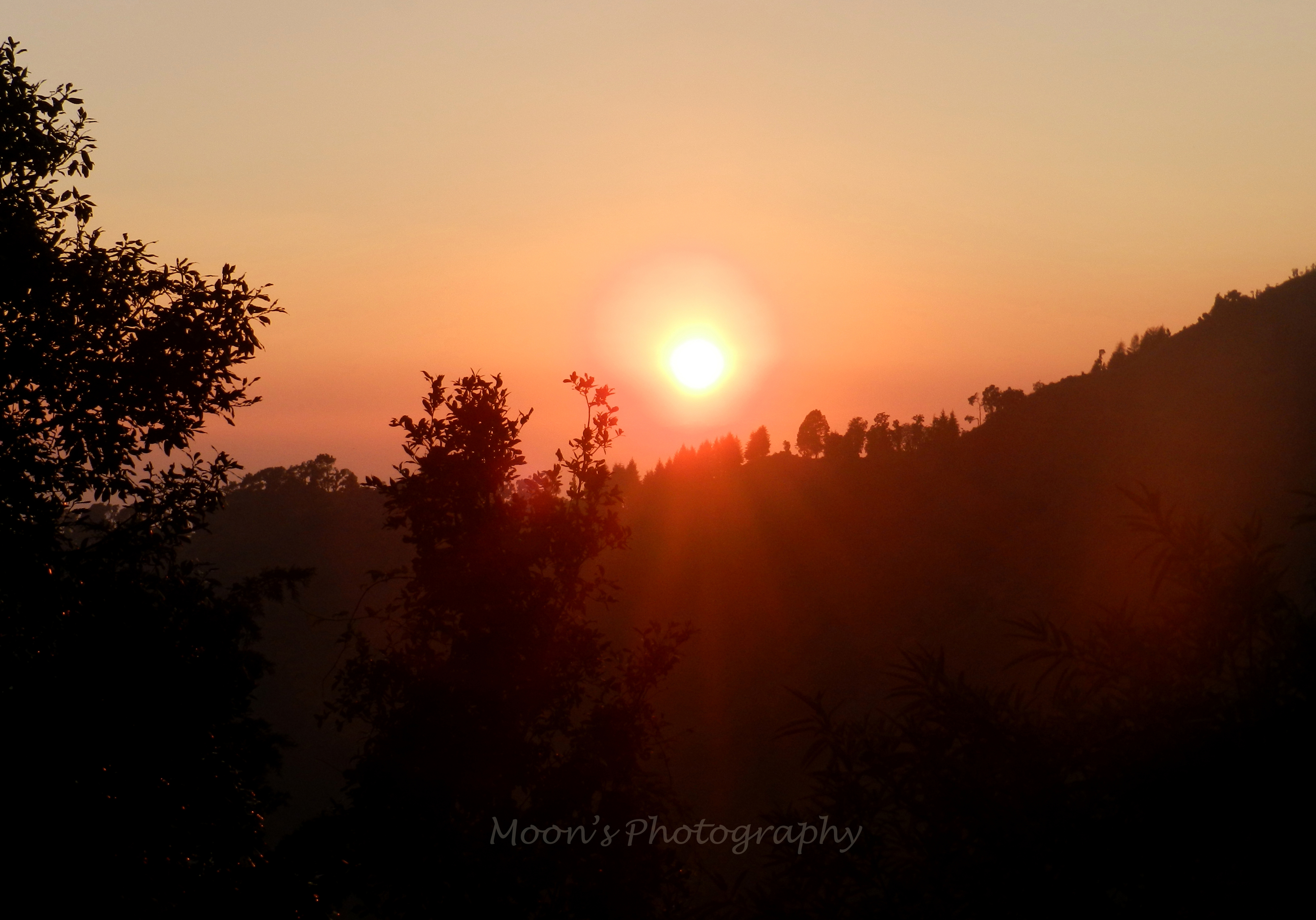
The sun was nearing the horizon. So, we left the waterfall behind and arrived at the Sunset Point, which awaited us with a grand surprise. I peeped down the cliff to discover the scenery that swept me off my feet! The sun was about to hide behind the mountain and I could capture only the following image in poor light. 😦
“It’s almost impossible to watch a sunset and not DREAM” – I read this quote somewhere. When we were watching the sunset at Khurpatal these lines occurred to my mind … so true!
Sunset at Nainital
Nainital Zoo, official name Pt. Govind Ballabh Pant Zoo, is one of India’s few high-altitude zoos. Here you will get a hint of Kumaon’s rich flora and fauna. Be prepared for a face-to-face meeting with some of Himalaya’s rare animal species such as snow leopard and black bear. In addition, there is leopard, Siberian tiger, wolf and wide variety of birds.
A leopard at the zooParagliding – Image: skybirdadventures.com
#4 Paragliding
This one is for adventure lovers. If you have a strong heart and feel the urge to fly like a bird go for paragliding at Bhimtal. The cost for a single trip is Rs 1500 per person. I thought I need some more time to gather the courage to take up the flight. However, here is a glimpse of the Bhimtal paragliding site for your perusal … 😉
Paragliding site near Bhimtal
#5 Shopping
Even if you are travelling on a budget, shopping is UNAVOIDABLE.
To me, shopping is a part of travelling, especially in a place like Nainital where you’ll find so many things worth buying. The mall road is lined with stores offering woolens, candles, woodcrafts and ornaments. There were trendy woolen caps, scarves, stoles, ponchos, cardigans and jackets for kids, women and men. Price for women’s caps range from Rs 100 to 500 depending on the knit quality and design of the items.
However, I could not resist buying a few sets of woolen cap and neck-scarf for my sister and me.
My new woolen cap and neck-scarf
Well… how do you like my new accessories?
The Mall Road leads to the main chowk (‘market’ in vernacular term), flanked by a Gurdwara and Nayna Devi Temple at one side and a Mosque and a Church on the other. The chowk is the recreational center of Nainital town. There were Tibetan and Cashmere stores as well in the main market.
Nainital is also famous for candles. You’ll find a variety of candles at the stores. In fact, candle making is an art here. Diwali was round the corner and I bought some colorful pieces of candles as a souvenir to take back home.
Eating in Nainital
After shopping we had some snacks (Aloo Tikki) and a cup of hot chocolate from a street-side eatery. There is no dearth of food outlets in Nainital – from full-service multi-cuisine restaurants to small street-side food stalls there is something for every budget. You’ll get a list of eateries in Nainital here. If you want to relish a cup of coffee in the afternoon while enjoying the view of Naini Lake Café Coffee Day on the Mall Road would be the right place for you.
Just like every good thing has an end, our Nainital exploration came to an end and we left for Kausani the next morning. But deep inside my heart I felt an urge to coming back in the city of lakes someday.
Rabindranath Tagore regarded monsoon as the ‘queen’ of all seasons. If you visit Alleppey in the monsoon you’ll no way but agree with the great poet. The wild beauty of Mother Nature bathed in monsoon rain is simply a treat to the eyes that you’ll cherish forever.
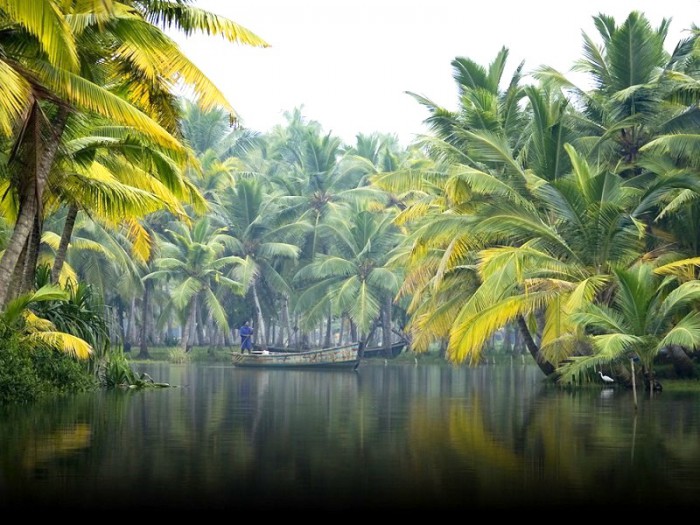
Alleppey or Alappuzha in Kerala is located 70 km south of Cochin, the major port city in Western India. The place is famous for its lush greenery and tranquil backwaters. Due to its numerous lakes and canals creating a network of waterways Alleppey is popularly called the “Venice of the East”.
Alleppey backwaters – Image: kvtholidays.com
How to Reach
The district of Alappuzha or Alleppey is well-connected to most of the important southern cities via railway networks. There are direct trains from Cochin, Thiruvananthapuram, Kozhikode, Coimbatore, Chennai, Bangalore and Mumbai.
The NH47 connects Alleppey with other cities including Cochin, Bangalore and Chennai. You’ll find direct bus services operating from Cochin to Alleppey regularly. There are overnight luxury buses to Alleppey from Thiruvananthapuram, Kozhikode, Coimbatore, Chennai and Bangalore.
The nearest airport is Cochin International Airport. After you land in Cochin take a train or bus to Alleppey.
Things to do
Though there are ferry services available, for a perfect leisure trip cruising in the backwaters on a houseboat is a must do. It is, perhaps, the best way to observe and enjoy the divine beauty of Alleppey. In addition to its scenic landscapes Alleppey’s rich cultural heritage is a major tourist attraction.
St Mary’s Church in Champakulam and Sreekrishna Swamy Temple in Ambalapuzha are famous for their religious sanctity as well as architectural grandeur.
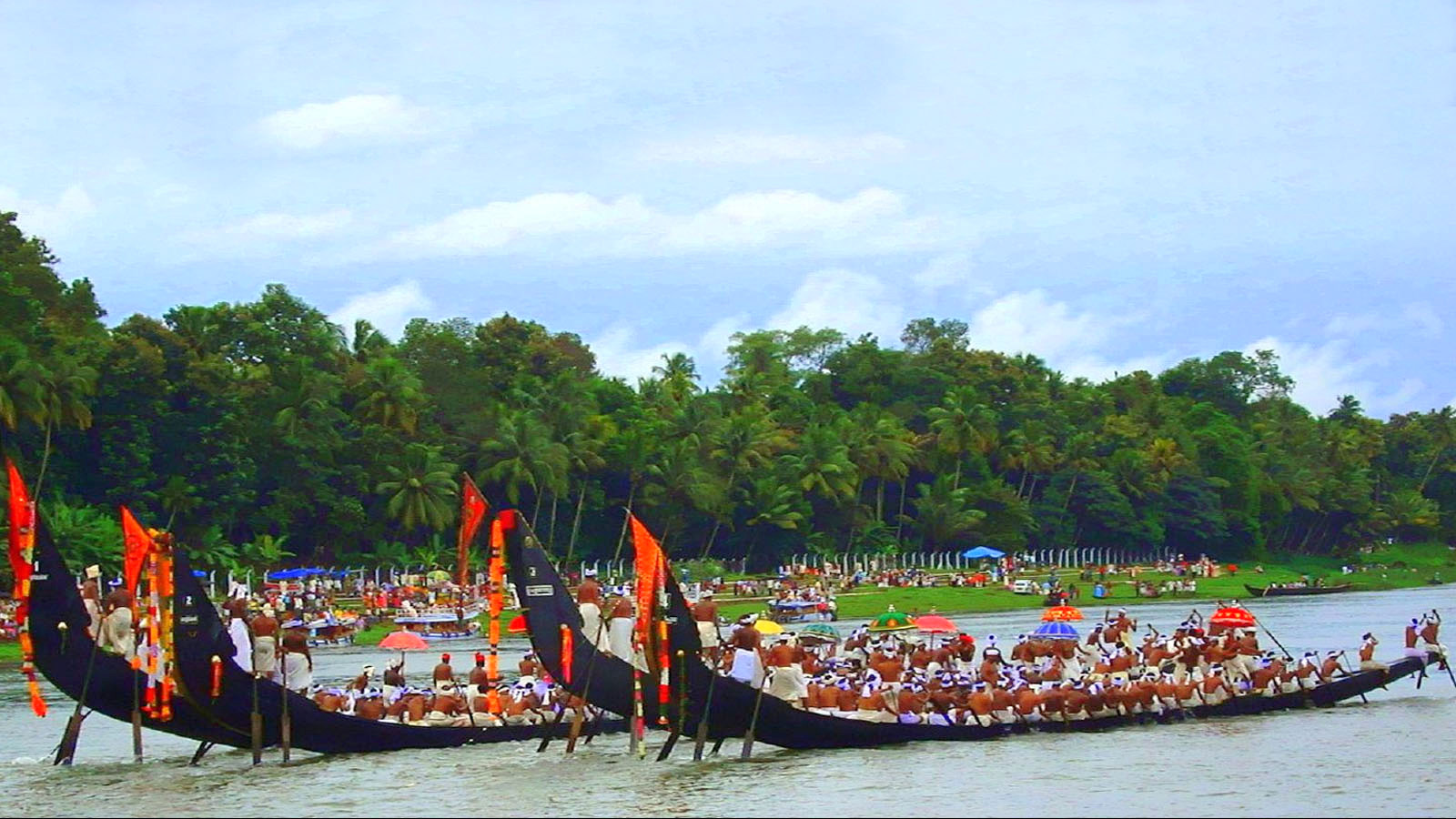
Watching the traditional snake boat race held in August and September every year is a bonus for travelling Alleppey in the monsoon. If you want a closer look to the boat race rent a boat instead of standing in the crowd on the banks.
When you feel tired after a daylong sightseeing trip, pay a visit to Krishnendu Ayurveda Wellness Center near Alleppey for a rejuvenating herbal spa treatment.
Alappuzha Beach is a perfect place for a quiet hangout in the light of setting sun. Take a stroll along the promenade and have a cup of coffee with your companion at the Indian Coffee House while watching countless waves breaking on the shore.
Where to Stay
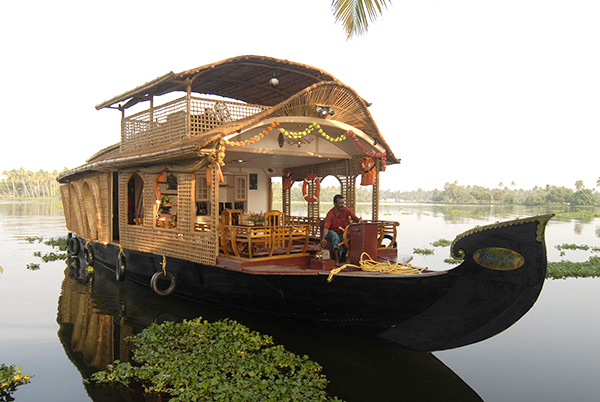
Alleppey thrives on eco-tourism. It houses a number of nature resorts and hotels. Located in secluded beaches these resorts are surrounded by tropical plants and coconut trees. The green rice fields nearby create a vista that soothes the tired eyes of urban travelers. Keeping in harmony with their environment the cottages are built in traditional Kerala fisherman’s hut style featuring thatched roofs and open courtyards. You can also stay in the beautifully adorned houseboats where you get to savor some delicious Malayalam dishes during your stay.
House boat in Alleppey – Image: alleppeybackwaters.com
Responsible travel
As part of your nature travel in Alleppey you should maintain the following etiquette as a responsible traveler. Respect the sanctity and cleanliness of the place.
Don’t throw away plastic bottles, wrappers and other non-biodegradable materials into the water or in the fields. Rather you should keep all your disposables in a plastic carry bag and drop it only in the garbage.
Don’t drop anything, not even food items, into the water during your cruise in the backwaters. You may get fined for this.
Don’t lean too much to touch the water. It may unbalance the boat and cause accident.
Monsoon, lasting from June to September, is typically a season in which most tourists avoid Alleppey because of heavy rainfall and water logging in the streets. Those who have the courage to face these odds are sure to have a rewarding experience. Another advantage of visiting Alleppey in the monsoon is that you may get discounts on booking hotels.
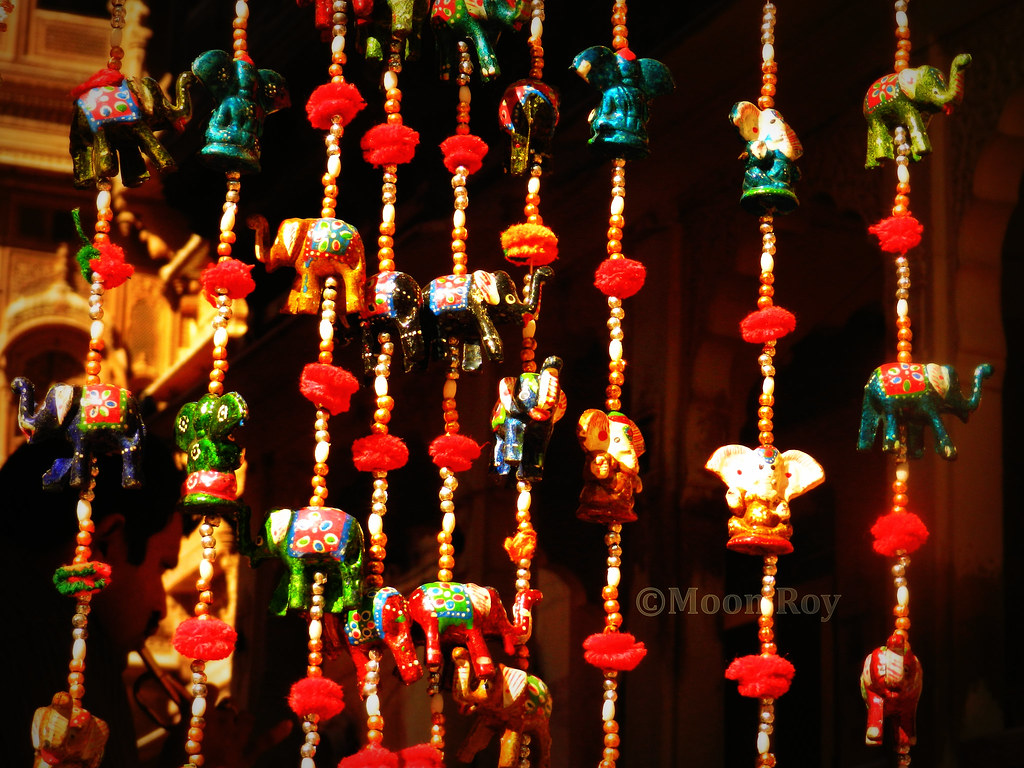
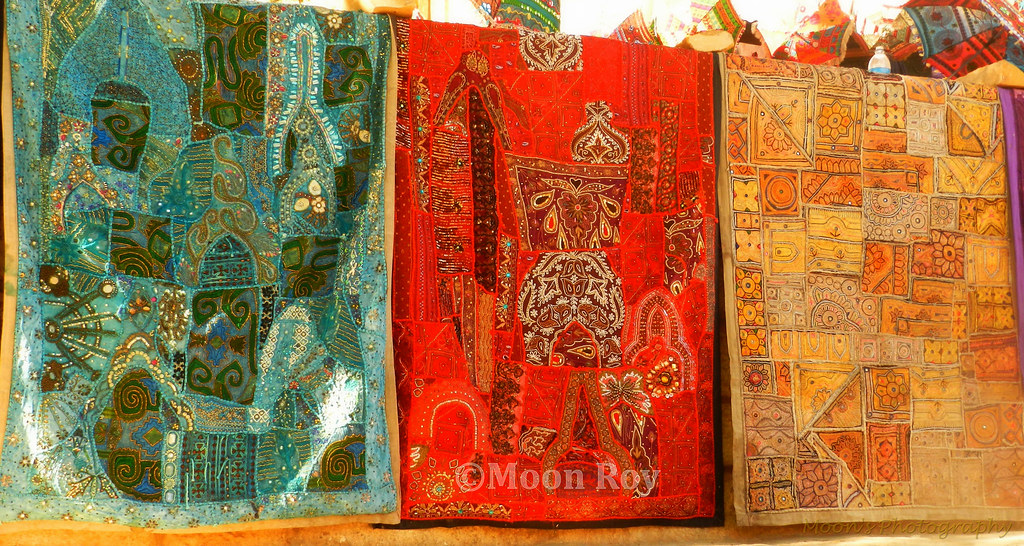

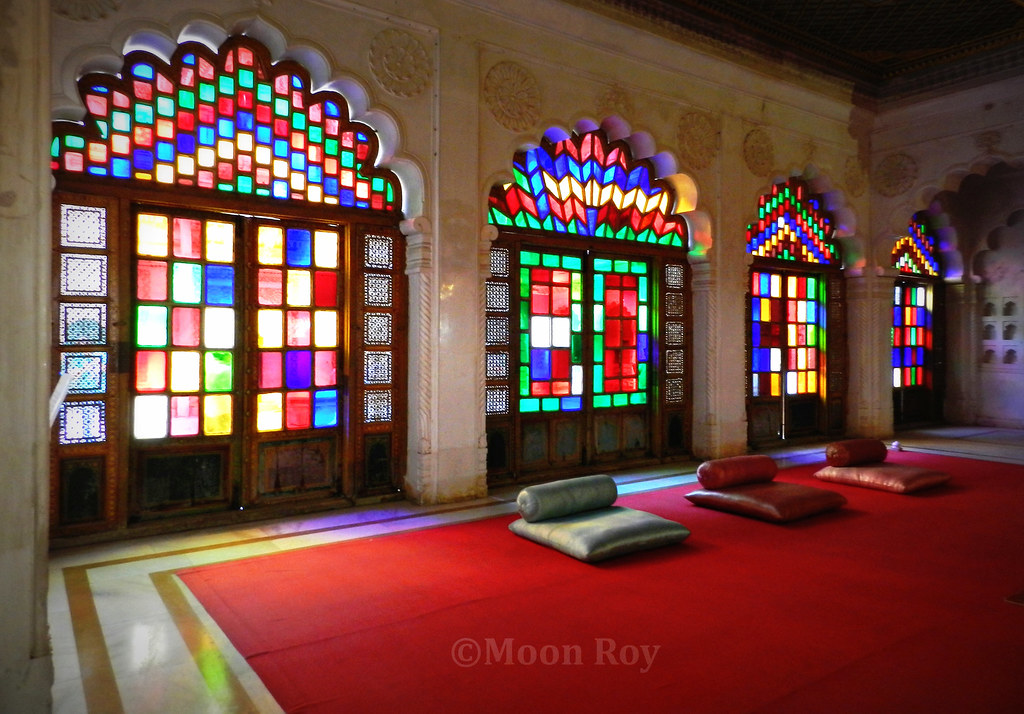

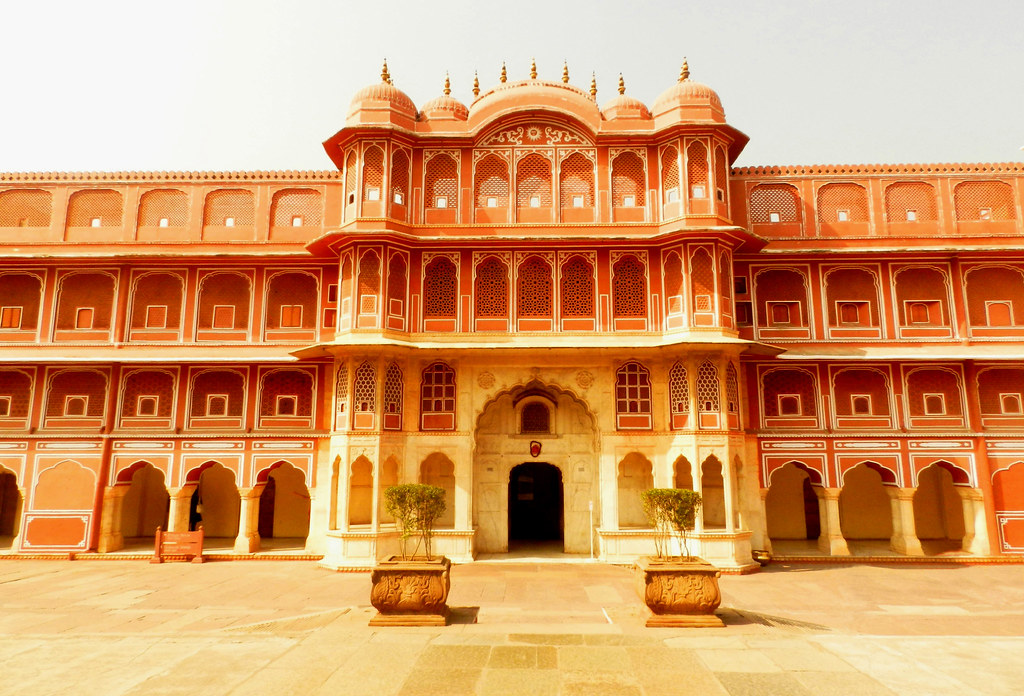
 Image: wikimedia.org


















 Footloose Forever